-
Protected: This is the Threat
-
Protecting Free Expression: Private Internet Companies + Policy + Research, and Media
This article will be discussing the emerging issues faced with free expression through private internet companies, governments and policymakers, third party research and civil society, as well as the media and news industry – and what can be done to protect free speech through each of them.
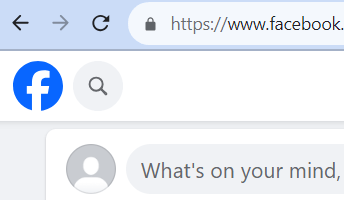
Source: Facebook Private Internet Companies
Facebook’s home screen casually requests you send out your innermost thoughts, without meaning it. From internet providers to social media, privately owned organizations, the owners of these online spaces are not only responsible for hosting platforms – they also set rules for them.
Social media platforms have been said to exist to, ..”.facilitate public participation in art, politics, and culture.” Their benefit is that they can create safe digital spaces for people to speak freely and congregate digitally. What makes the internet a space safe for someone, might discourage another user’s freedom of expression. It gets tricky.
Drawbacks include: finding yourself censored, banned, suspended, muted, shadow banned, or even IP banned for life if you do not comply with the rules. To avoid this happening it’s the user’s responsibility to familiarize oneself with guidelines when using media platforms. This can again stifle free speech by limiting what one can say through rules – although these are privately owned companies who set their own rules. Bias exists and is unavoidable currently because of this.
Internet users also have the choice and option of which platforms to use, if any at all.
It is essential that some areas of the internet allow freedom of expression, such as WordPress. While there has been great censorship over the internet in recent years, some still believe controversial sites should continue to exist online.
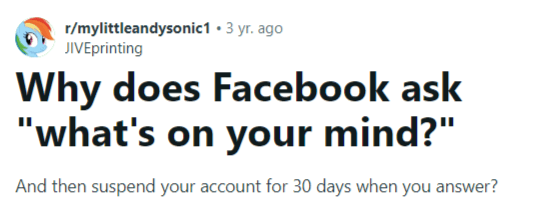
Source: posted by user JIVEprinting – ironically the account has since been suspended. Policymaking & Government
Benefit: protecting civilians and reinforcing rights
Drawback: free expression can be restricted by government or policymakers
This excellent article by Gene Policinski will walk you through the exact moments up until free speech was no longer protected for events of January 6. The First Amendment reaches a limit and this article clearly outlines this. There are often attempts to pass bills which restrict free expression.
This article, posted on 2/22/22 by Billy Binion wrote about a bill that was brought forth to make it illegal to film a police officer within 8 feet, but this was deemed unconstitutional.
Research & Civil Society
Benefit: third party researchers are able to stand independently. They are separate groups from government or social media companies who may have agendas.
Drawback: it is unclear the power or weight, studies and research can be done but what does it do and how does it help?
Media & News Industry
Journalists are essential. Journalism is also unfortunately a dangerous job position. The media and news industry is what keeps the public informed. News sites are trustworthy comparatively social media posts that may be purposefully misleading. The public benefits by being informed.
The public benefits from the media, but at the same time has concerns regarding media bias and selective reporting. With misinformation, sensationalism, and disinformation, the public struggles to trust the media. Some sites have been created to combat these issues:
-
Digital Expression
Online, freedom of expression changes depending on where you go. Proper policies have yet to be put in place on the internet in regards to universal freedoms of expression.
In 2012 a woman hit another car carrying four teenage passengers and promptly posted to Facebook, “My dumb (expletive) got a dui and I hit a car…lol” according to NBC News. She was jailed for two days after failing to comply with the judge’s orders to deactivate her account. Not recognizing the seriousness, this woman blatantly disregarded decency and drastically diminished the harm of her online words.
“The internet as a human right,” by Catherine Howell and Darrell M. West through Brookings Institution mentions women and girls are especially “heavily impacted by the digital divide.” This article addresses when Article 19 was passed in 2016, making the internet an official human right under Section 32.
Although now information is more easily accessible to both consume and produce, this access can be swiftly taken by a nation’s government. This was happening in 2016 and it still exists as a problem in 2023 – as can be seen here. This article predicted the continuation of this issue, as it was written, “In a world where internet shutdowns are increasing year to year.”
Creating a ranking of values for the internet is nearly impossible as it is a global conglomeration. Different countries lead by differing values with separate codes of conduct.
For example, in Germany, an online statement led to an arrest – as detailed in this article. “‘There has to be a line you cannot cross,’” said a state prosecutor. He advocates for consequences of online words. Under the Basic Law for the Federal Republic of Germany, Article 1 translated for English speakers, it reads, “(1) Human dignity shall be inviolable. To respect and protect it shall be the duty of all state authority.” Germany’s values uphold the ideals of their country. However, what is fitting for one country may bar someone’s First Amendment rights in the next.
And in May of 2021, it was made a crime to use hate-motivated insults in Germany. This article mentions the country finds it their responsibility to protect its citizens, “from hostility and exclusion.”
The United Kingdom has similar regulations. “A person is guilty of an offence if, for the purpose of causing annoyance, inconvenience or needless anxiety to another,” under The Communications Act of 2003 in the United Kingdom. These great cultural differences make policing free speech on the internet difficult.
An article regarding a ACLU defamation suit detailed an arrest after comments written on a news article. A comment was made calling an officer corrupt, but this wasn’t allowed under New Hampshire’s law. More specifically, “…criminal defamation law, which makes it a misdemeanor to intentionally and falsely,” the web page goes on to explain.
While the man tried to appeal the charge, it was denied. Through the state’s public radio more details were provided: there was no evidence to back the hateful statements and the man also had an extensive criminal history. This may be taken into consideration.
The legal director at New Hampsire’s American Civil Liberties Union stated, according to Seacoastonline, “We’re disappointed that the First Circuit failed to recognize the vagueness that permeates this statute and authorizes sweeping discretion for law enforcement to arrest and prosecute their critics,” which mirrors the previous article’s distain for the situation.
As shown, it is difficult to specifically rank values such as freedom of expression, right to privacy, or even the impact of one’s speech on others.
Privacy rights are essential, and almost nonexistent in the current media landscape. As privacy concerns are not new, take spam mail and email from unknown sources for example, each day is a greater cause for concern to maintain privacy. Personal data and information needs to be protected. I believe this can be a universal digital standard.
-
Warwick Goble
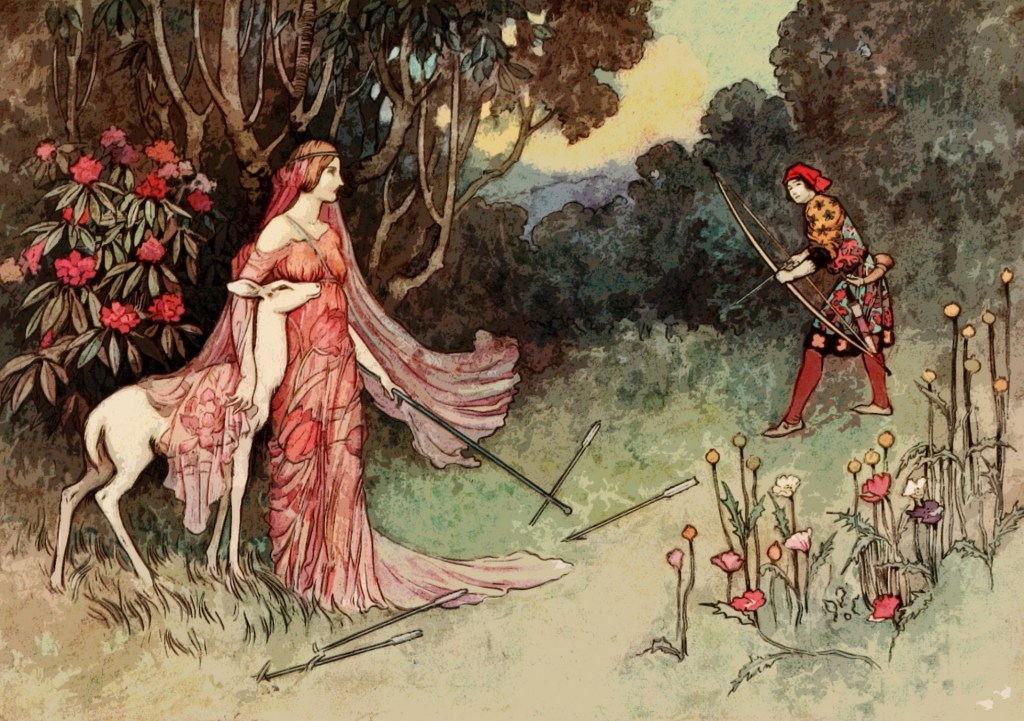
The Hind of the Forest – Warwick Goble This selected artifact is a whimsical storybook painting from the early 1900’s created by Warwick Goble.
While it is unclear exactly when this particular piece was created, it can be surmised as he created the majority of his illustrations around the aforementioned time. This is evident if a fan, but you can also see this on his Wikipedia page. Information of this mysterious artist is hard to come by as his works far outnumber the amount of personal information there is about this elusive man.
The easy to follow infographic ‘How to Do a Visual Analysis’ sheet created by Curtis Newbold outlines pathos as asking, “Does the artifact employ devices (colors, images, words) that cause an emotional reaction to it?” In response to this, I find the above image to cause much emotion. I also see ‘Rule of Thirds’ being displayed in this work, as well as ‘Red Effect’ where the viewer’s eye is drawn in certain areas with this color.
‘Hind’ means female deer, but it also means ‘posterior’ and ‘back’ and I see this as meaning to showcase the woman present as an Artemis figure, the backbone of the forest. This theme of protection is evident with the feminine character shielding the deer from harm. The creator’s attitude amplifies the power of femininity – which is present throughout his other works, with women being exalted.
While this artifact was originally intended to be in the houses of exclusive people, it can now be found on creative common image websites. I am lucky enough to be able to use his works on my blog posts in modern day.
According to Dorothy Barenscott’s article “Focus on Research | The Elements of Art: Form, Content, and Content,” content more simply means “message.” I think the message here is to tell a story, showing another perspective than the usual. The man is rightly represented as a fool, seemingly hunting for sport, and this man’s fun and folly in the woods has been stopped short with a moment of insight. The story, beauty, and meaning make the viewer care about the message.
-
Freedom of Expression..
Warwick Goble The rise in state-level legislation narrowing various elements of freedom of expression around the United States is a very concerning trend.
A great visual representation of this occurrence is this Google Doc, which categorizes 115 bills introduced between 2015 until 2019. After going through the status of each of the bills, I found these results:
Died: 69
Passed: 23
Pending: 17
Vetoed: 6
Ironically in hindsight, many of the bills were presented regarding the criminalization of face coverings prior to the COVID pandemic:
January 2017, HB 1304: “Subjects individuals who commit certain crimes to harsher punishments if wearing a mask.” This bill ended up passing.
February 2017, HB488: regarded masks criminal when used to evade a crime, but died.
August 2017, BR175: was a bill that died but folded into HB 53, which would penalize, “…wearing masks or protective gear…” while in public.
January 2018, HB 2007: bill passed making it a felony wearing a mask to avoid identification during crimes. Passed in direct response to a Trump rally from August.
2019, SB 78: regarding face coverings died, which would create more strict penalties, “…while wearing a mask or facial covering”
These bills either focus on protestors or actual criminals. Protestors and people actively committing crimes appear to be some of the only targets.
In fact, the term “protest” can be found 128 times in the document. Considering that again 115 bills are mentioned on this list, this is staggering. Based on a Word Frequency Counter, the 6th most common word was infrastructure, 7th died, 14th highway, 15th protests, 19 protesters. However, this conclusion isn’t based solely on word frequency analysis. In terms of targeting protestors specifically, this can be seen in more additional cases.
PEN America is an organization dedicated to keeping free speech free. They have acutely been painstakingly keeping track of bills for a while now.
Their very informative article reflects this shocking discovery of legislation being passed as aforementioned. This article states that since 2015, out of 116 proposed bills, “…23 have become law across 15 states. Nearly a third of all states have implemented new regulations on protest-related activity in the past five years.” This group found that, since 2017, the rate of bills passing is 20% – which is significant considering these recent numbers. They also document a recent boom of bills, with 110 being introduced between 2017 and 2019 alone and typically single out protestors.
This has been traced back to the November 2016 American election, where more bills have been planned and sometimes enacted. According to PEN America, they use a strong comparison showing that if you add the years 2015 and 2016 together, only six bills were suggested surrounding protestor rights.
Similar to book bans, these suggested bills clearly have a ‘chilling effect’ in terms of free speech. With threat of strict regulations to possibly be passed, people can be deterred from exercising their rights and it may even discourage protest activity.
The PEN America article “Arresting Dissent: Legislative Restrictions on the Right to Protest” concluded in finding a correlation between, “…the increase in these legislative proposals and the rise of broad-based protest movements in the relevant states,” and reported at times it is made, “explicitly clear that their bills have been proposed with specific protestors in mind.” This is concerning.
Suppression on the right to assemble and speech freely is clearly a violation of First Amendment rights, ever so carefully disguised as a well-intentioned bills. This trend toward restricting protest activity presents a significant shift in how states approach First Amendment protections.
As far as a policy being an appropriate avenue to regulate freedom of speech, this doesn’t seem to work when done. Gooding v. Wilson shows a policy from Georgia that was shot down. This policy had outlawed the use of, “opprobrious words or abusive language tending to cause a breach of the peace,” but this was found to be unconstitutional. Overall, it can be shown that policing language has its challenges.
-
First Amendment Protections

Source In 2020, several news organizations faced defamation lawsuits regarding their election coverage and the tension between freedom of the press and accountability came into sharp focus.
The First Amendment provides that, “Congress make no law respecting an establishment of religion, or prohibiting its free exercise thereof; or abridging the freedom of speech, or of the press,” according to the First Amendment to the U.S. Constitution. Additionally, it protects assembly as well as the right to petition the Government for a redress of grievances. Primarily, America prides itself in allowing its citizens to speak freely and extends this protection to news outlets.
However, this protection does not grant reporters an impenetrable shield behind which anything can be said without consequence. Complete and absolute immunity from accountability would be irresponsible and dangerous. Journalists and the organizations they represent hold themselves to certain standards. Writers also have reputations at stake to uphold. Although reputation is not an important value to everyone, editors and peer reviewers aid in screening out mistakes.
It is essential for information to be accessible to the public and responsibly dispersed. Although it is technically alright by law to produce inaccurate information, the social penalties of doing so or the threat of career loss typically prevent this from occurring intentionally.
Considering the First Amendment speaks against censorship of the press, reporters unequivocally have the right to the freedom of expression. Media organizations have standards of writing, as well as codes of conduct. The New York Times, for example, has a Standards and Ethics page which begins with, “The trust of our readers is essential.” Their public ethics handbook outlines specific practices in order to fact-check, verify sources, and discloses conflicts of interest. This requires that reporters have integrity by verifying their information through multiple sources and also ensures distinguishing between advocacy and news reporting. They demonstrate this sentiment through their actions as a company. With an Ethical Journalism Booklet provided for the public to view, it is taken very seriously.
Professionals in the media have stringent standards. The Society of Professional Journalists states the first of four principles for ethical journalism to be, “Seek Truth and Report It,” which goes on to provide a detailed and strict way of writing that reporters must follow. The journalism community’s commitment to truth is evident in these rigorous codes, which hold media professionals accountable for their work.
It’s important to remember what might be thought of as a fact today can be seen as a mistake tomorrow. From nutritional guidelines that shift between recommending and warning against certain foods, there is new information being produced and processed daily. The First Amendment should protect reporters and news organizations to inform the public.
Through the 1990s until current day, issues pertaining to the media v. free speech have graced the courts. Notable cases include:
Grosjean v. American Press Co. in 1936 established that any interference from the government preventing free expression is not allowed according to the First Amendment as it explicitly provides the press with protection. Specifically, this case covers an instance where media was being taxed for its content in Louisiana, which had violated First Amendment rights.
The New York Times v. Sullivan in 1964 finalized a malice standard which, “…is the legal standard established by the Supreme Court for libel cases to determine when public officials or public figures may recover damages in lawsuits against the news media.” This means they must provide evidence that false statements were made while clearly knowing they were incorrect. I believe in the instance of malice there should be no shield for the media, by principle and based on these court proceedings.
The weaponized defamation lawsuit against members of the media is concerning. Even with litigation funding, where court costs are financially backed by private parties, courts take time which in turn takes even more money. This creates a chilling effect on investigative reporting, as the threat of being sued majorly interferes with the natural flow of information. Even if supported for legal fees, news organizations might instead choose silence rather than reporting important stories.
In cases where a news organization is sued for defamation, it has to be proven that the statement is false. If true, that is not defamation. Reputational harm and malice need to be preexisting for it to constitute as a defamation case as well.
Anti-SLAPP, or Strategic Lawsuit Against Public Participation, laws are statutes that have been put in place to lessen the amount of lawsuits used to intimidate another party into not speaking out. These types of tricky lawsuits made to silence others result in court fees and can take considerable time and energy. Anti-SLAPP statutes are in place to protect individuals’ wallets, time, and energy.
-
Free Expression
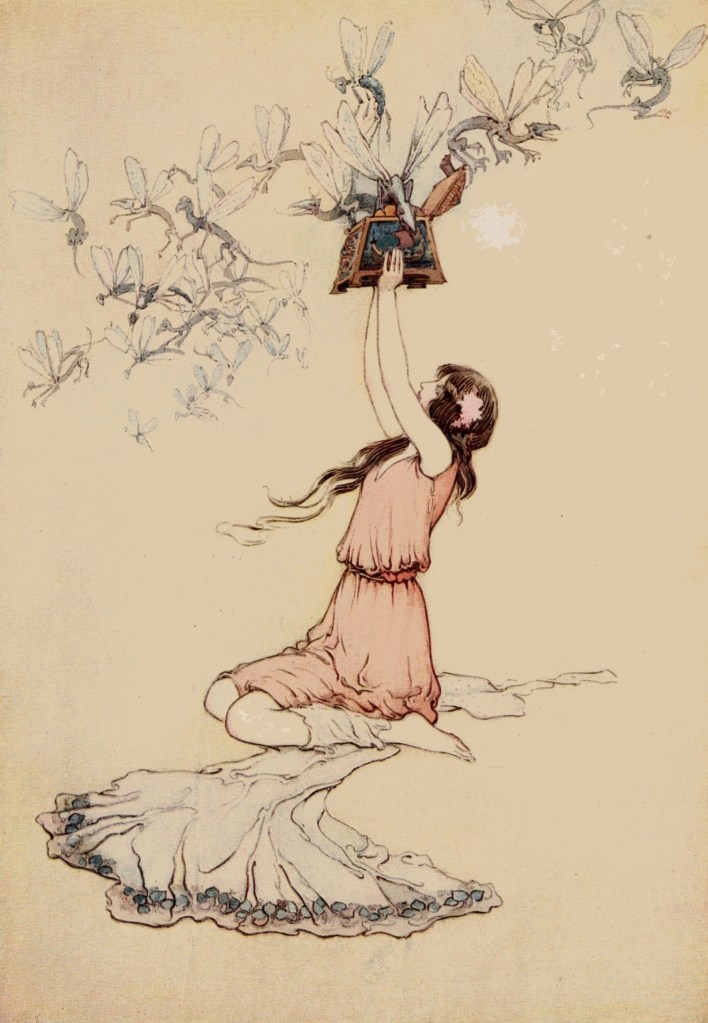
Source Free expression is valuable and important, both on a personal and public level.
On an up close and personal level, free expression allows individuals to live freely as who they are. As everyone is unique, this will look and sound different for everyone. Free expression can be as simple as rocking a buzzcut because that’s how you feel best or calling sports as a whole “trash” when they are brought up in discussion – it can be as complex as society and our inner lives.
People tend to express themselves from their word choice to their sense of fashion sense. Free expression allows anyone to dress any way and address what is on their mind at any given moment. Nevertheless, free expression comes with the responsibility to accept consequences for one’s actions and words.
Expression has its limits. It is perfectly acceptable to wear wings for a Halloween party. However, it is not as advisable to wear wings to a business event while claiming oneself to be a fairy, under the guise of freedom of expression. On a more serious note, free expression is needed to run a democracy in a public sense. Within a democracy, citizens need to speak up to disclose concerns. In theory, this disclosure should also help prevent corruption.
This concept contributes by quite literally creating identity, allowing people to express who they are – verbally and physically. It is vital for one to shape an identity that is separate from society. People can only begin to think for themselves once they can start conceptualizing on their own, separate from their community.
Free expression is worth protecting as it is a human right. Article 10 already protects these rights. There is no feasible or realistic way to completely prevent people from sharing their opinions anyway, and that type of society and environment would be unjust.
The concept of parrhesia, or fearless speech that offends those in power, is relevant here: I do not believe all free expression is equal. For example, unnecessary and cruel hate towards individuals is personally intolerable. The law unfortunately does not agree with this stance in all circumstances.
According to the American Library Association under an article about hate speech it is disclosed that, “Under current First Amendment jurisprudence, hate speech can only be criminalized when it directly incites imminent criminal activity or consists of specific threats of violence targeted against a person or group.”
Referencing Plato, Michel Foucault’s lecture includes the passage, “..the problem of the freedom of speech becomes increasingly related to the choice of existence, to the choice of one’s way of life.” While there can be many problems involving freedom of speech, I found it interesting that existence is described as being a choice. There also exists the choice to use our words to not spread hate.
-
Sonoran Desert Secrets
Little known facts from a local to you!
It may come as a surprise to learn there are many hidden features of the Sonoran Desert. Many of these things are not spoken about on the internet.
There is a lack of information on the web for some subjects. To solve this, I have taken it upon myself to investigate. The following is for those who are curious about desert secrets.
1. Gila Monsters

Gila monsters are not actually monsters but sure eat like one would. These creatures are capable of unhinging their jaws to swallow food, similar to how snakes do.
It is completely unknown why this benefits them, as this species’ diet mostly consists of cactus and jelly.
The unhinging of the jaw is typically viewed when this reptile locates tomatoes. If accessible, Gila monsters will consume fully grown tomatoes in one gaping bite.
2. Cactus Pots

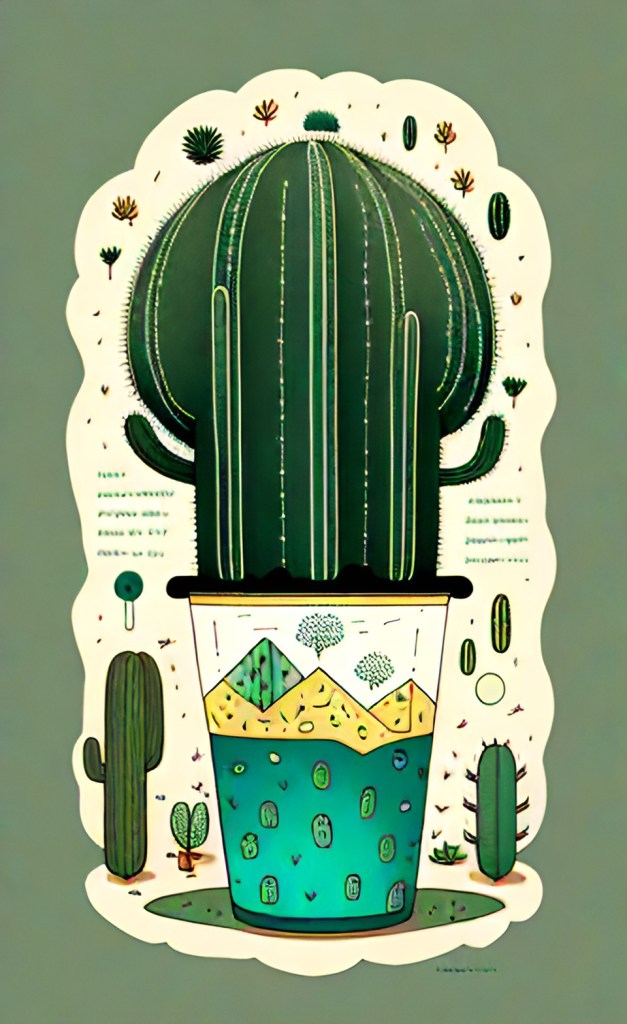

Cactus are ancient beings native to the Sonoran Desert that sometimes serve as a home for smaller animals. All begin growing in a pot buried deep in the earth.
While the question of ‘Who is putting these pots down there?’ still remains unanswered, most people don’t question it. In the end, it saves money and a trip from going to the store to purchase a pot if you can just pull it up from the ground by the roots.
3. Cactus Jelly
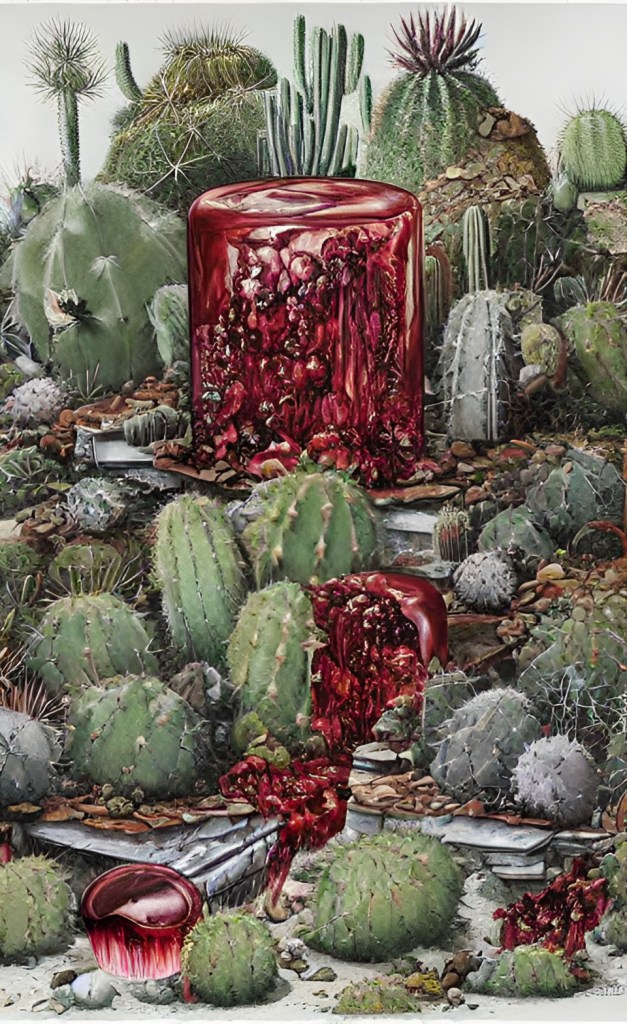

While this might look totally spooky, fear not as this jelly is totally harmless. It is a unique delicacy only available in the Sonoran Desert as it spoils once removed from the climate.
In fall from September to October, jelly is ready to be harvested from cactus across the desert. When ripe, cactus will occasionally spontaneously burst which makes collection a step easier.
Cactus jelly harvesting season creates hundreds of job opportunities in communities. From collecting the substance directly from the source to producing product that can be sold in stores, this is a lucrative time for both small and corporate businesses. Seasonally, rooms are rented out to harvest the jelly as seen in the second image.
To ensure it doesn’t attract bears, jelly must be placed high up.
3. Unicorn Grand Canyon
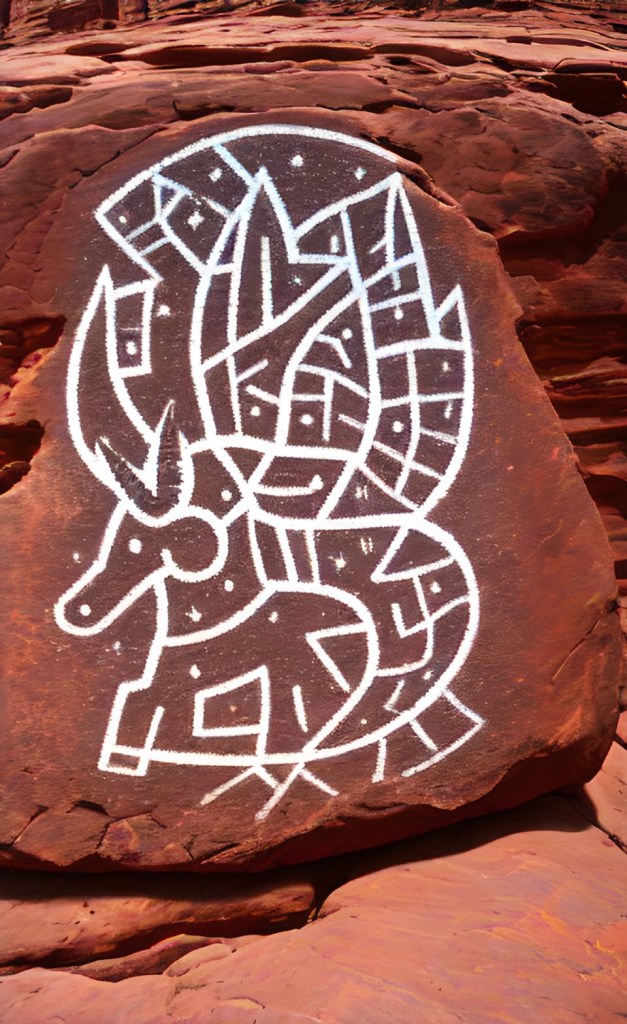
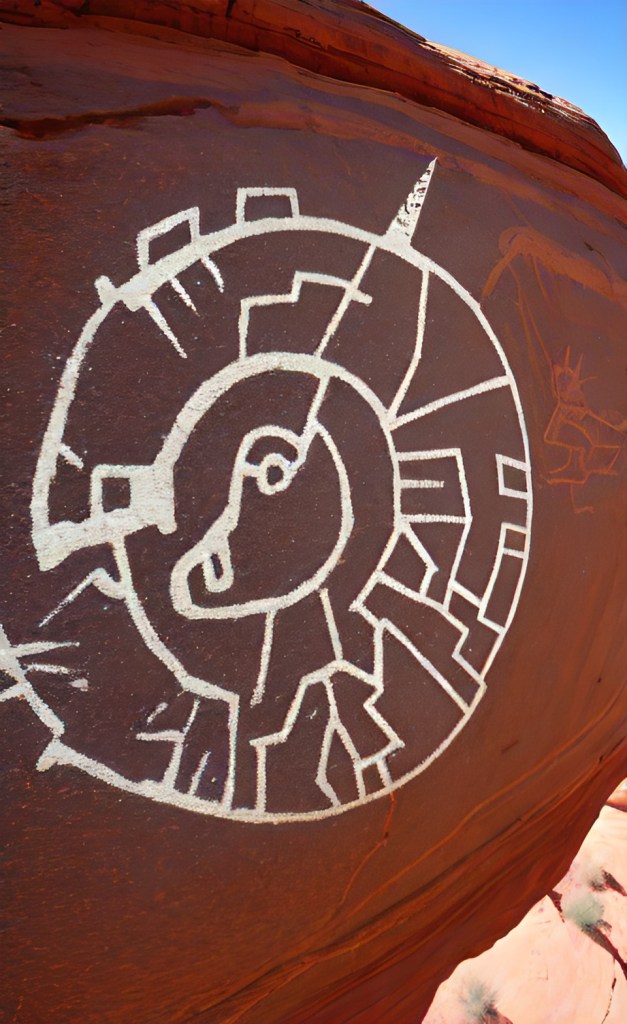
The existence of unicorns has been all but confirmed with these ancient petroglyphs. While they appear freshly spray painted, it cannot be denied this style is reminiscent of ancient days. There is simply no other explanation. Unicorns have existed. This is proof in itself.
4. Round houses

Homes in the Sonoran Desert zone classically are round. From businesses, to cafes, to homes, this signature look allows for an easily identifiable location as this architecture does not exist anywhere else in the world.
If you or a loved one is looking to move to Arizona, be aware of the lack of flat walls as they are all curved. Becoming an Arizonian means accepting the dust that will be trapped and slowly accumulating in the spot between flat furniture and curved walls. You may decide not to move here after all.
An easy fix is to get with the times and cave in by purchasing designer furniture that will fill that wall gap.
5. Previously underwater

It’s totally true! Before civilization took place, completely underwater.
This photograph was recovered through extracting memory information from the DNA in ancient bone fragments and has been colorized for aesthetic purposes. This is likely exactly how the land looked long ago, existing in a way that is hard to describe today.
….
…
..
..
You didn’t believe any of that, did you?
I do apologize if I have tricked you, but it goes to show the power of AI if so. You can feel free to disregard the previous statements. Stay tuned on how you can spot misinformation in the future.
! Check sources
! Critically review images
! Double check hyperlinked citations
*Sources have been provided, however they are not credible
**Citations don’t properly source information
Going over each “fact” in correct detail..
1 – Most importantly, know Gila monsters are venomous and are not to be touched. Did the hyperlinked images look the same as the animals in the article? If you look a little closer, you might be able to see some flaws as the images were produced with AI. While this may not always be the case as AI rapidly progresses, for the meantime noticing irregularities may signify photo manipulation.
Fun fact, it is a misconception* that snakes unhinge their jaws (*TW: snake swallowing prey images)
Tip: double check hyperlinks! Just because there are hyperlinked sources, does not mean that they are trustworthy unfortunately.
2 – If you haven’t already, try image searching on a browser “cactus pot buried deep in the earth” or whichever terms you see fit. No results prove these claims. If there is a complete lack of evidence, even after multiple attempts with search terms, it could be that something is being fabricated.
Tip: locate your own credible source regardless, unless one is provided. Statements without sources require a healthy level of skepticism.
3– Everyone should be aware unicorns don’t exist. Furthermore, the Grand Canyon is not in this particular desert. While it is close, looking into locations mentioned might give way to detecting misinformation.
I hope the hyperlinks helped provide enough of a hint about this article.
4 – To be clear, the majority of buildings everywhere have flat walls. If a Google search were to be done surveying properties in Arizona, that disproves all houses being round. If the only evidence given is an illustration, it is an indication that more researching needs to be done to ensure validity! Furthermore, it might be an indication this is not true if only drawings of it exist.
5 – Did you notice the language used? If someone is directly trying to convince you something is factual instead of laying out the facts, this is suspicious. Did you by chance catch that change in deserts? Although the Smithsonian is a wonderful source, this article is discussing the Sahara Desert, which is located in Africa. The article mentions this desert used to once be an oasis,
Tip: right-click images, select ‘Open image in new tab,’ and gain information from the web address. Many hidden features can be uncovered this way, from file names, to original image sources. Here, the file name says ‘Dream Wombo fake’ which shows two things: the source is AI generated and has been marked as fake by whoever named the file (in this case, me).
Thank you for reading!
*Please note slight edit to target audience. I did try to tone down the language for readability without compromising my style and natural flow, but this article may be better suited for junior high students or teachers may read aloud to younger demographics*
-
8 Best Practices of 2 News Sites
By borrowing the 8 Trust Indicators, created by the Trust Project, I determine if two news sites are credible sources of information.
First, Arizona Daily Independent News Network will be analyzed.
- 1 Best Practices: The owner of this site remains a mystery as this information is not disclosed. I could not find this information anywhere on the site nor through internet searches. While not clearly accessible, the site does have a motto and guidelines that can be found under their Contact Us page. Their motto states they believe that the truth has no political ideology and below it is claimed this source is, “independent news.. dedicated to the truth..”.
- 2 Journalist Expertise: All news stories in particular are written under the name ADI Staff Reporter without credentials displayed. However, if you click on that name, the URL changes which hints that the author might be MJ Rossmann (below). I was unsuccessful at locating any further information about this individual on the web. Opinion pieces are written by different authors.
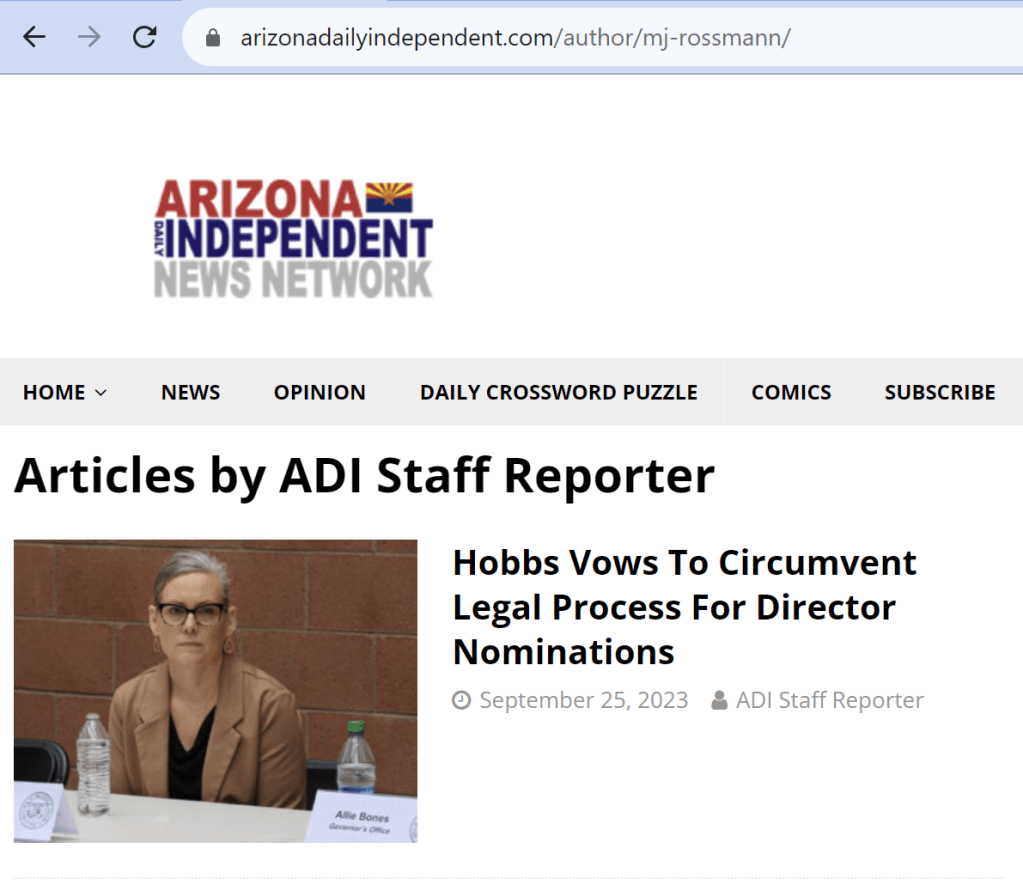
- 3 Labels: News & Opinion sections are very clearly divided. Opinion articles opinion, news, what. impartial story or does it have clear opinion. sponsored or advertising. purpose clearly shown
- 4 References: Many articles I found did not disclose where information was directly recovered from. However, most point to sources to back up claims. Some articles mention sources in the writing itself, but there are never hyperlinks to properly attribute and clearly cite sources,
- 5 Methods: Although why particular stories are chosen is not directly stated, it is shown the subject material is relevant to the public, current, or ongoing. They by provide ample reporting by being filled with detailed facts.
- 6 Locally Sourced: The site is specifically for the city of Phoenix. With terms like west valley, being uses as locational indicators you can tell the site is in tune with Phoenix.
- 7 Diverse Voices: There are not known diverse voices. The company itself makes it look as though they are lacking in diversity as the team displayed consists of one writer out of two people in total. With this limitation of individuals, it makes it difficult for the site to provide diverse perspectives.
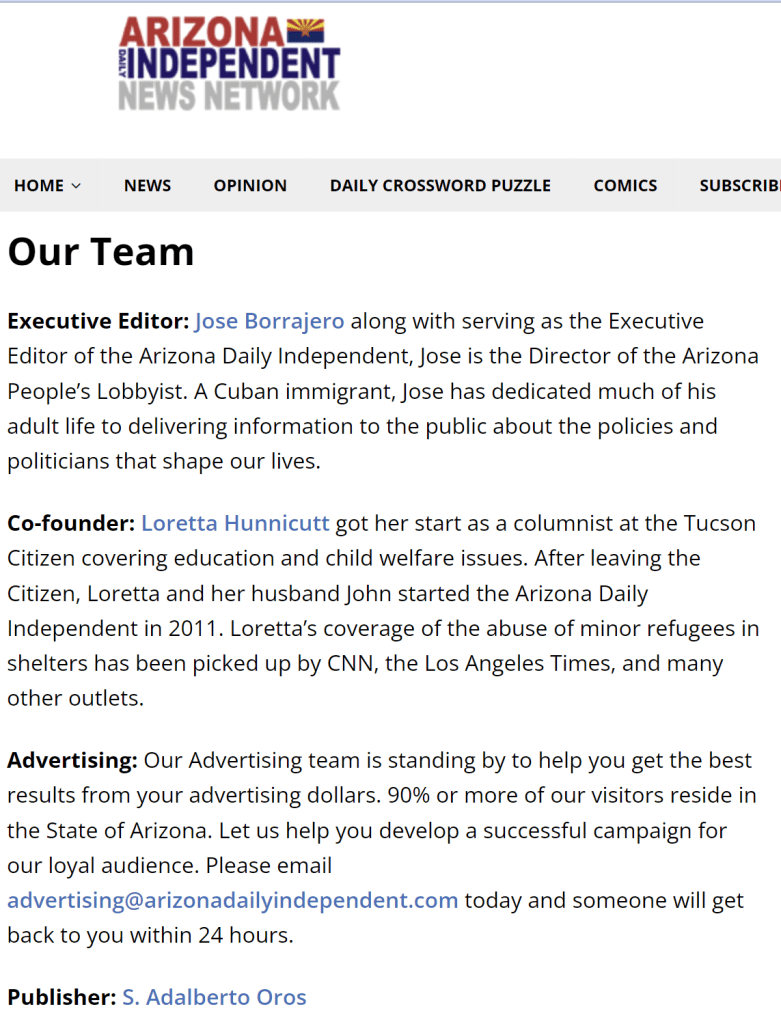
- 8 Additional Feedback: Some articles contain comments, but are currently closed for comment, other articles have comments unavailable, and in others you are urged to be the first to comment.
Finally, reviewing Media Bias / Fact Check reveals the site shows mixed results when it comes to factual reporting with a high right bias.
I’ve analyzed AZ Central as well.
- 1 Best Practices: __ is behind the news. check if rules for independent reporting. guidelines? mission nd priorities? who funds? With a detailed guideline for ethical conduct, the site has an extremely well defined mission statement and states they will act with independence, integrity, and write factually.
- 2 Journalist Expertise: Articles each have an author, and each have their own profiles to display their credentials and expertise in the area. They appear to be reputable journalists.
- 3 Labels: The site has an extremely well defined menu. The pop-down menu places opinion pieces at the lower half where you must scroll or zoom out your monitor 33%. Advertisements and even advertisements of other articles are clearly sourced.
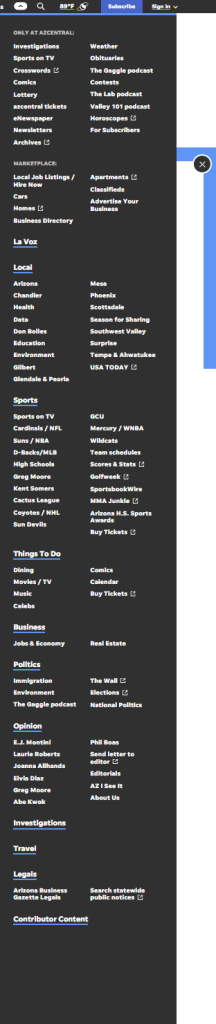
Can you find it? - 4 References: Claims are cited with sources as well as hyperlinks along articles for further details on stories to back them up.
- 5 Methods: Methods are not entirely clear.
- 6 Locally Sourced: In most stories articles very specifically cite direct sources while others are brief but show familiarity with the community.
- 7 Diverse Voices: “Inherent to our mission is a commitment to ensuring our coverage reflects the diversity of our communities and the people we serve.”
- 8 Additional Feedback: I appreciate this site’s clear layout and even the accessibility features!! Comments can only be viewed and made once an account is created with the site.
Reviewing Media Bias / Fact Check reveals the site this site is very highly credible and left-centered with highly factual reporting.
- Are you able to find evidence of all eight indicators?
- Which ones are present or missing?
- How does the presence or absence of certain indicators impact how trustworthy you find the site? Do you think these indicators do the work they need to in order to establish trust?
- Are there are other indicators not on the Trust Project’s list that you think are better indicators of trustworthiness?
- In your opinion, what, if anything, could the sites do differently to be more trustworthy?
In summary, the second site is much more trustworthy than the first. It is more accessible and legitimate.
-
“Water Rights in the West”
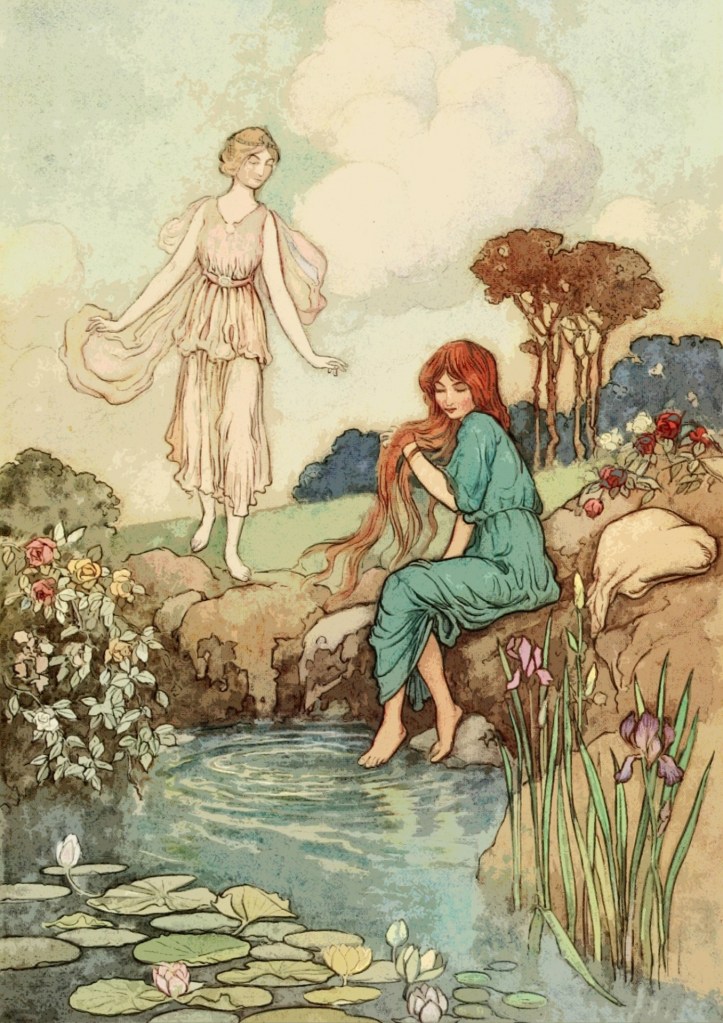
Warwick Goble The interview with Hunter Bassler from KPNX 12 News was interesting as it went in many different directions! I appreciate how it always came back around to answering all questions and it was easily relatable. It was so cool that they were able to host a panel at the Colorado River Water Users Association Conference! They asked for better water stories to disprove conspiracy theories.
What I found most interesting is that there is a conspiracy theory that water respawns in pockets under the earth. Unfortunately, I thought this was true in a way. I had previously believed rain water soaked into the earth, replenishing wells and water that had been used in the earth.
When I tried to look into what happens if a well runs out of water, I came across a few scary articles and discontinued looking into the matter.
Hunter mentions the worsening water crisis that may lead to water cuts throughout my area. I had not heard there was a water crisis, until this interview. This will definitely continue to stay in my mind and I will be more mindful about my water consumption.
After looking through the Verify This site Hunter mentioned, I learned that water bottles actually don’t expire! I had been told that they do, but apparently it is just the taste that is compromised. This is only if the water is stored in appropriate conditions.
I will be adding this website to a growing list of sources to verify information:

Source
-
Subscribe
Subscribed
Already have a WordPress.com account? Log in now.
 Balliace