-
Discord + X’s stance regarding misinformation
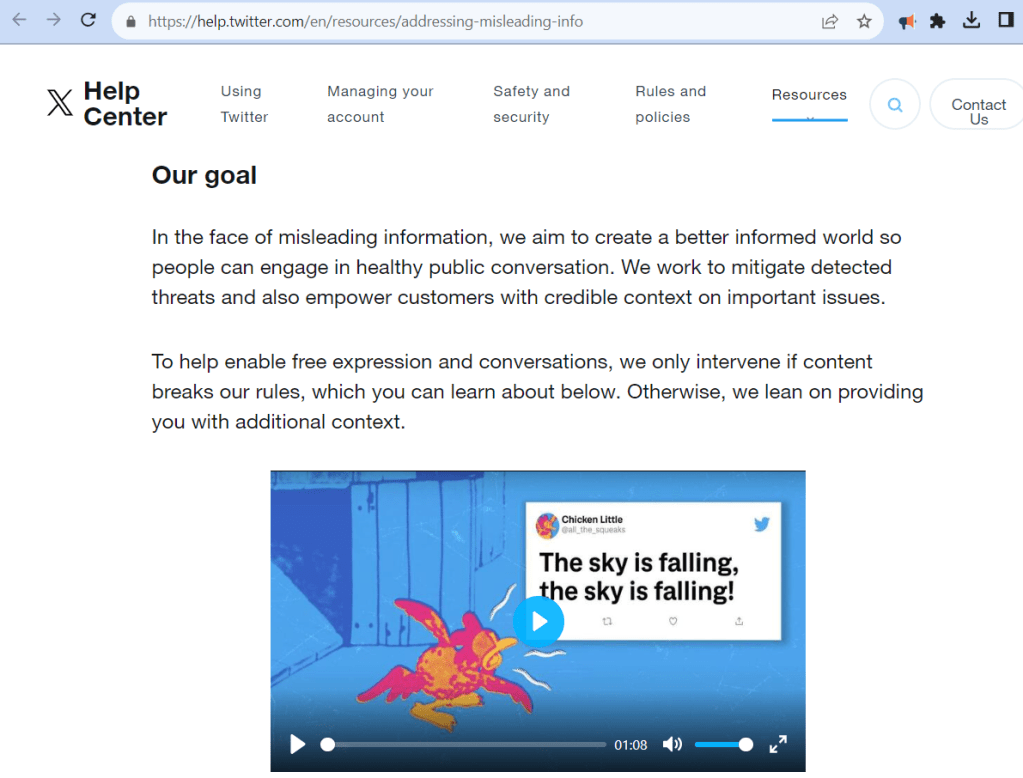
X and Discord are two platforms who take a stand against users spreading misinformation on their sites and applications. X, formerly known as Twitter, allows users to post media within guidelines while Discord works as a messaging application that has similar rules of its own.
X makes efforts to curb misinformation under their Crisis misinformation policy, from August 2022, “We will take action on accounts that use X’s services to share false or misleading information that could bring harm to crisis-affected populations.” During times with dire situations at hand, it is especially important that incorrect information is demolished before it spreads any further. For example, it would be against X’s policy for a user to claim vaccines will result in being plagued in bad luck and will leave your bloodline cursed for generations as jest.
Users on the site have a total of two strikes when it comes to misinformation. At this point of the process, it might be worth it for X to consider having the accounts manually checked to ensure they aren’t bot accounts. It might just be someone who is mistaken, or confused.
In April 2023, X prohibited synthetic and manipulated media, adding it to the guidelines addressing users not to post or share. Accounts that do will have their posts labeled and possibly locked to cease causing further confusion.
Source: here With a background at Twitter’s Fraud and Risk Operations, Alex Anderson, current Senior Platform Policy Specialist and Expert of Platform Integrity, published a blog post to Discord on February 25th, 2022.
This blog post‘s purpose was to notify users regarding an update to Discord’s Community Guidelines. The post outlines an addition to the terms stating, “..users may not share false or misleading information on Discord that is likely to cause physical or societal harm.” It is evident Discord is concerned about the wellbeing of its users.
The actual phrase outlined in the guidelines reads, “Content that is false, misleading, and can lead to significant risk of physical or societal harm may not be shared on Discord.” Incorrect statements made about public health, disease, and vaccines are not allowed. In summary and in short, users are prohibited from spreading health misinformation.
If any misinformation is spotted on the application, the article provides directions to report it here.
Digital misinformation is harmful because it hinders people’s ability to come to well-reasoned conclusions — and it does so at a rate faster than what is possible with in-person dialogue.
Alex AndersonIf Discord wanted to go a step further to prevent the spread of misinformation they could implement a blacklist of fake news websites, as recommended by Lyel under the feedback section. This post was discovered after I searched if this was an implemented feature, although it appears moderation is not interested in the idea, but I can see how this would be lower on their list of priorities.
On October 28th, 2022 a Transparency Report from April to June of the same year was published on the aforementioned blog. The report relayed the termination of 270 accounts and 73 servers on account of misinformation. While it is wonderful that over 70 large groups spreading incorrect information have disbanded, leading to less contradictions, these numbers seem concerningly low, as there 19 million servers on Discord.
While both Applications are working towards preventing the spread of misinformation, more accessible and readily available tools to report such things should exist. Multiple steps sending users in different directions and circles isn’t exactly helping anyone.
For example, I went to falsely report the first post I saw on Twitter to view the steps without submitting anything. It was made clear that reporting misleading information was only important if it was related to health or politics.
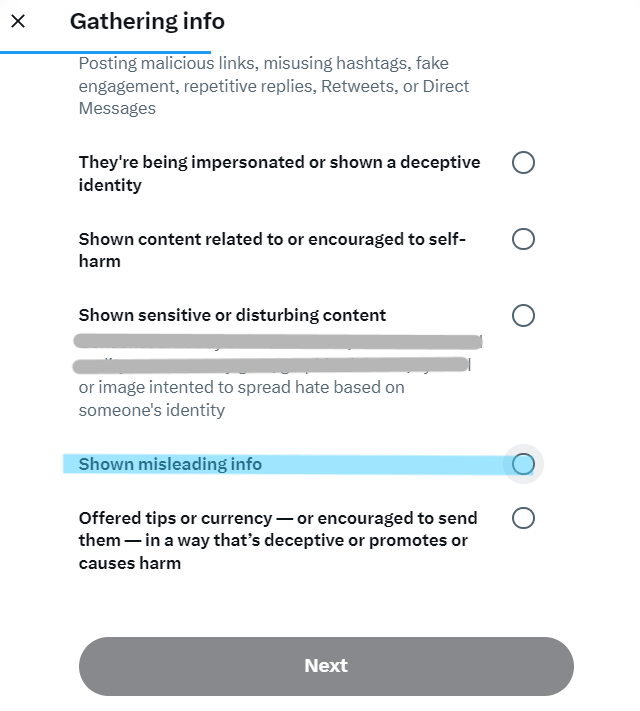
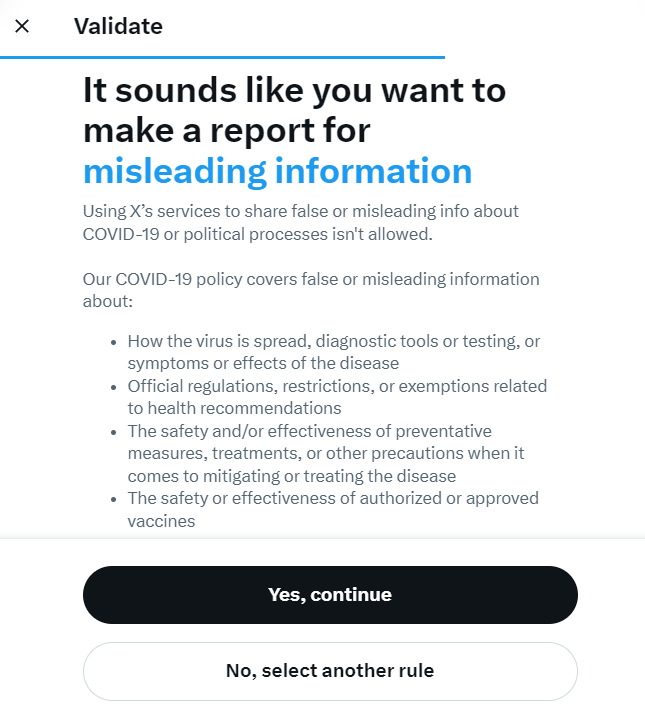
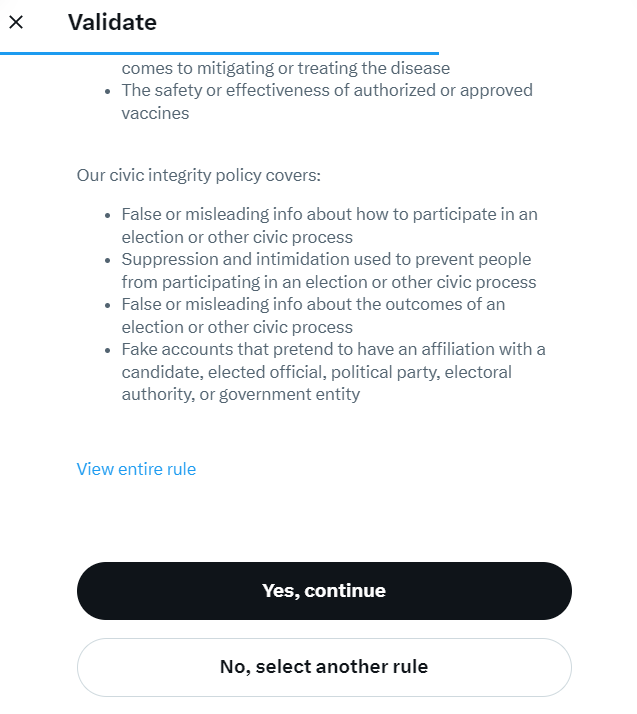
It’s terrific these companies are striving to eradicate untrue health and political information, but why stop there?
One afternoon about ten years ago, when sites were less moderated, I changed the information of several Wikipedia pages. Our class was instructed to research the variance chicken breeds but were warned against using that site. So, instead of a Silkie’s egg color reading cream or tinted, I inputted something along the line of light blue with pink speckles. Present day I cannot recall my motives, maybe it served its purpose for this anecdote here.
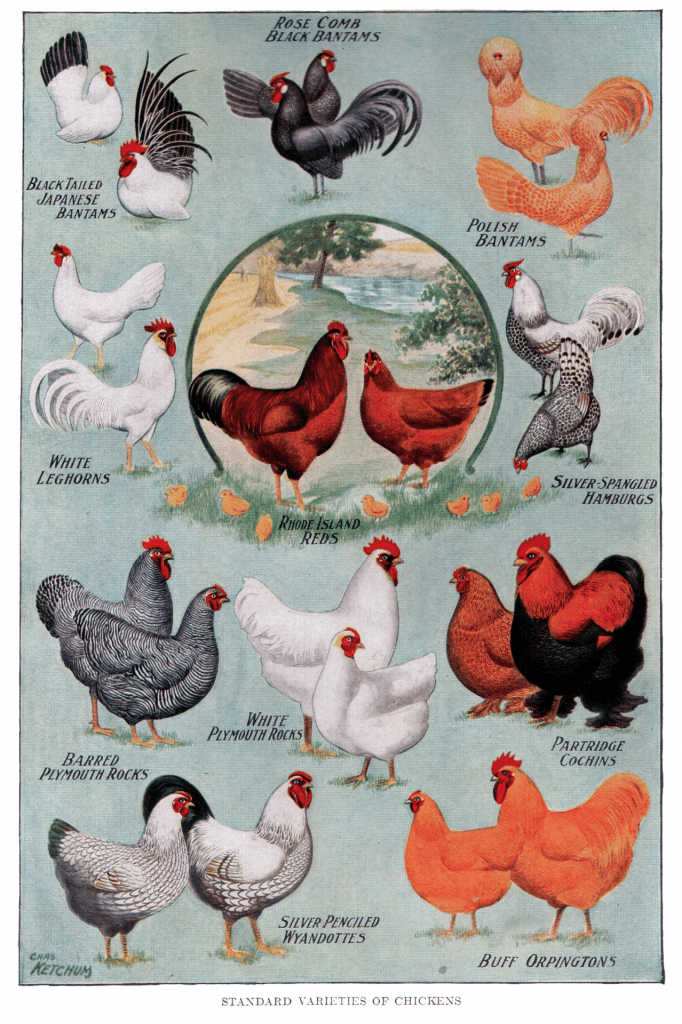
Source: here I believed the misinformation to be unbelievable at the time, yet some in my class wrote it down even though it wasn’t to be used as a source. I recall the confusion in class. But, in modern day, sites are much more heavily moderated.
However, on X and Discord there is not much stopping occurrences like that. And some might even be potentially more harmful.
-
Claiming Colors
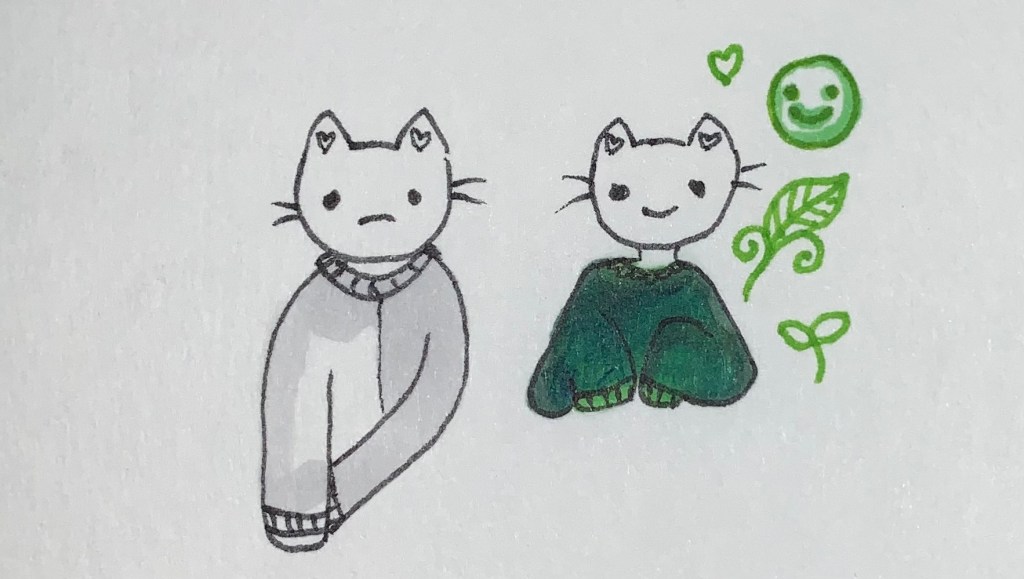
Source: me “It doesn’t matter what color you wear,”
I overheard at work earlier this year. Maybe you have had a similar thought regarding color or have heard someone subtly say something as fact that made you hesitate for a moment. This statement sounds final. But is it true?
We often hear opinions stated as fact and as a result believe them to be so. While I am sure many – including myself – desire to automatically and properly sort fact and opinion, our minds do not work this way. Richard Sima, a former neuroscientist, quotes Stephan Lewandowsky in his article, “By default, people will believe anything they see or hear.”
“Dismissing misinformation requires a whole extra cognitive step of tagging it as false in our memory. But by that time, in a sense, it’s too late, because it’s already in your memory,”
–Stephen LewandowskyTo avoid filing away opinions as fact in our mind, it is a good idea to look into new information that gives you pause. Luckily, we can easily access nearly limitless amounts of information over the internet.
#1 Search
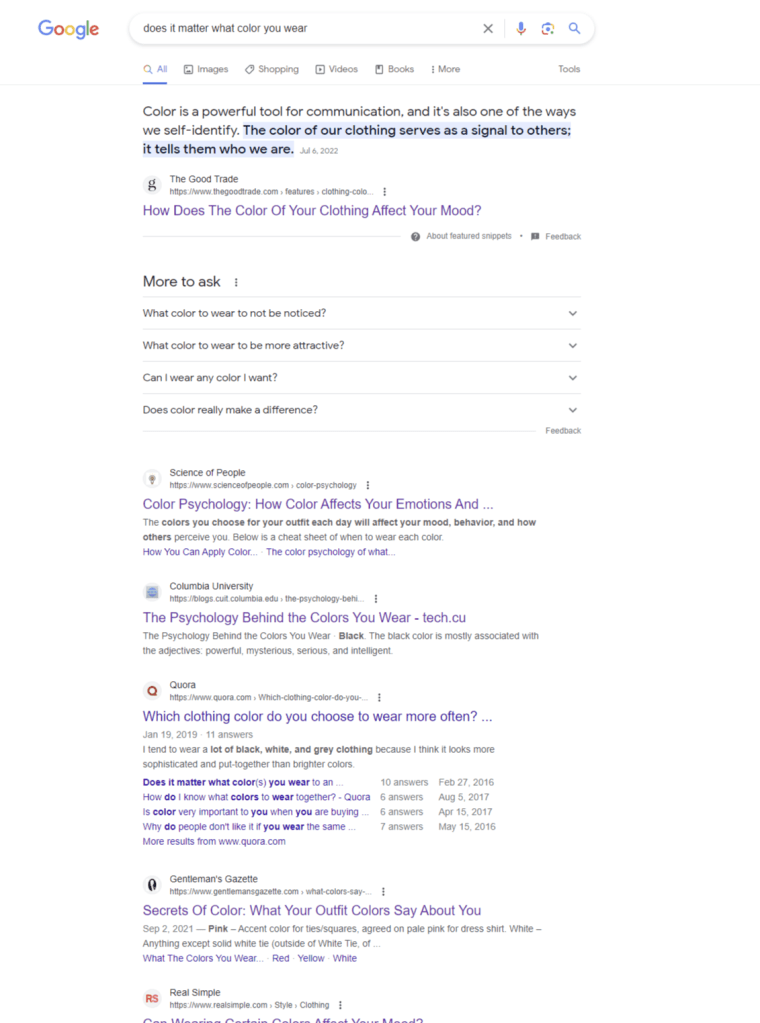
Select a search engine of your choice: DuckDuckGo, Google, Ecosia, Yahoo.. and enter the phrase under investigation. For instance, I will search “does it matter what color you wear” on Google as I am most familiar with it.
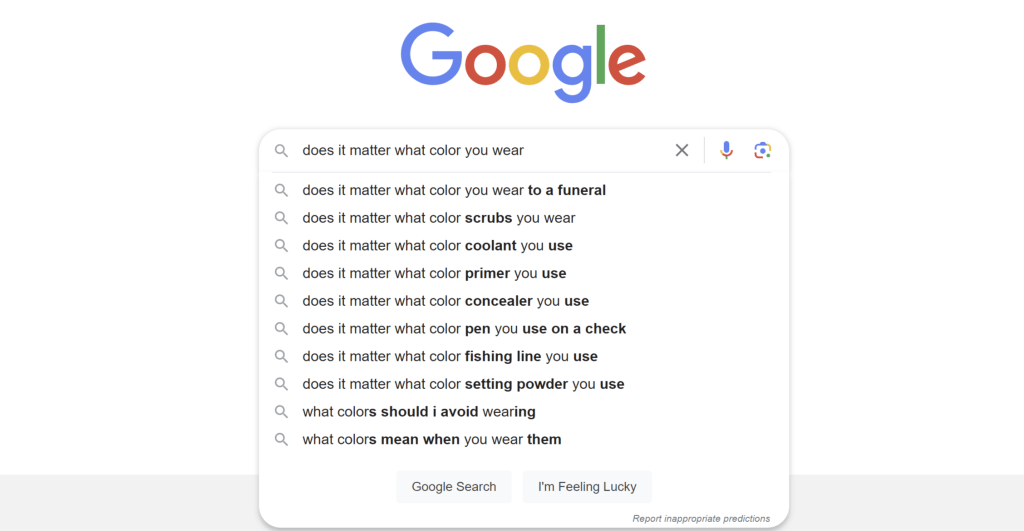
#2 First result
Consider the first search result, but don’t stop there. Can you find other sources that confirm or deny your initial findings?
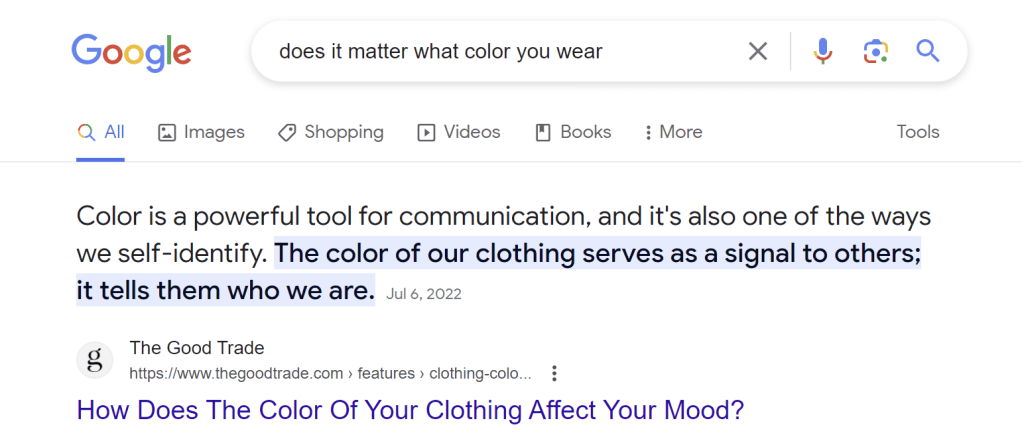
#3 Browse results
Select a variety of sources by right clicking “Open link in new tab”. I personally filter out search results like Quora as I historically have not found concise and reliable answers on that site.
#4 Lateral reading
Open up links that appeal to you and appear relevant. For this example, I will be opening the first five results on the page, but you could opt for choosing sites that are familiar with trusted credibility.
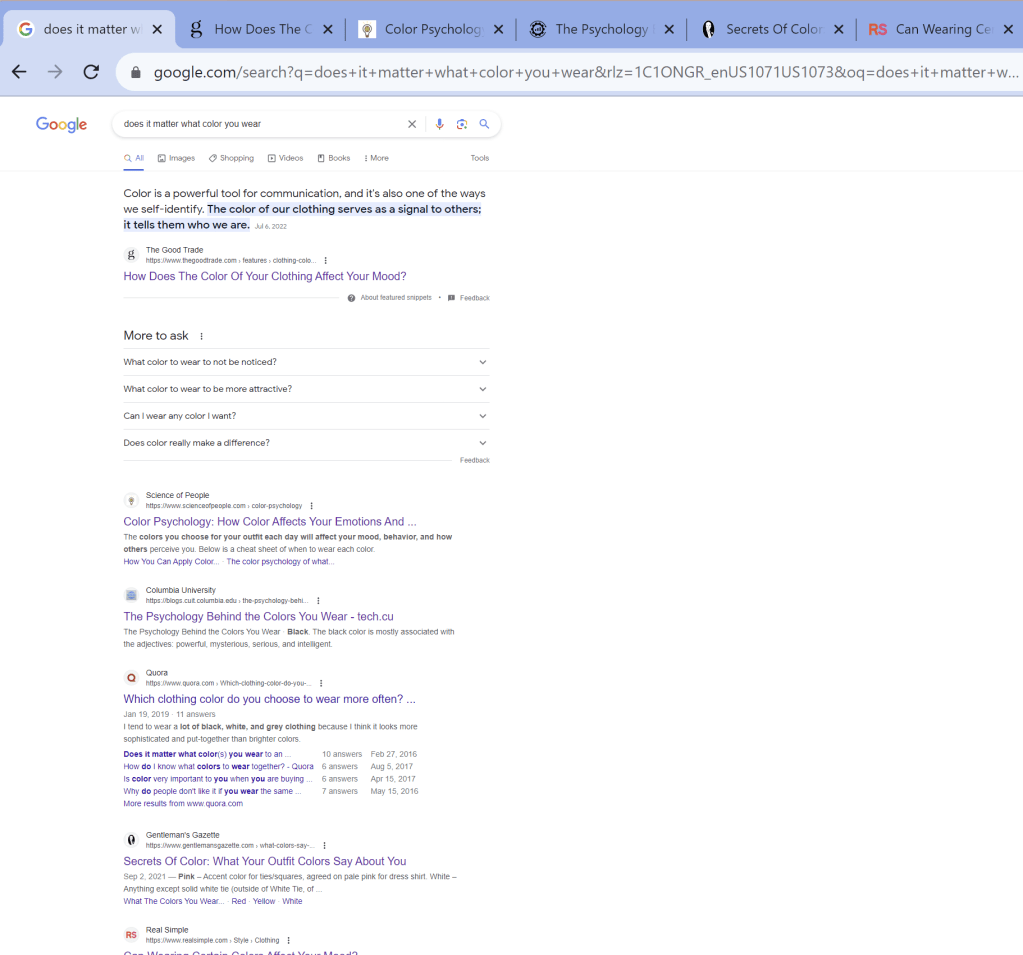
(tip: I did not look into Quora results, but
if you require first person narratives try Reddit)#5 Determine source credibility
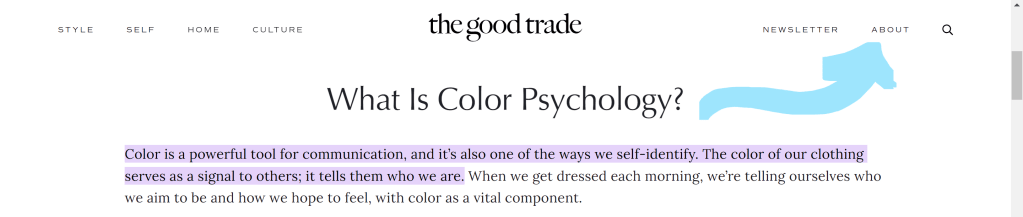
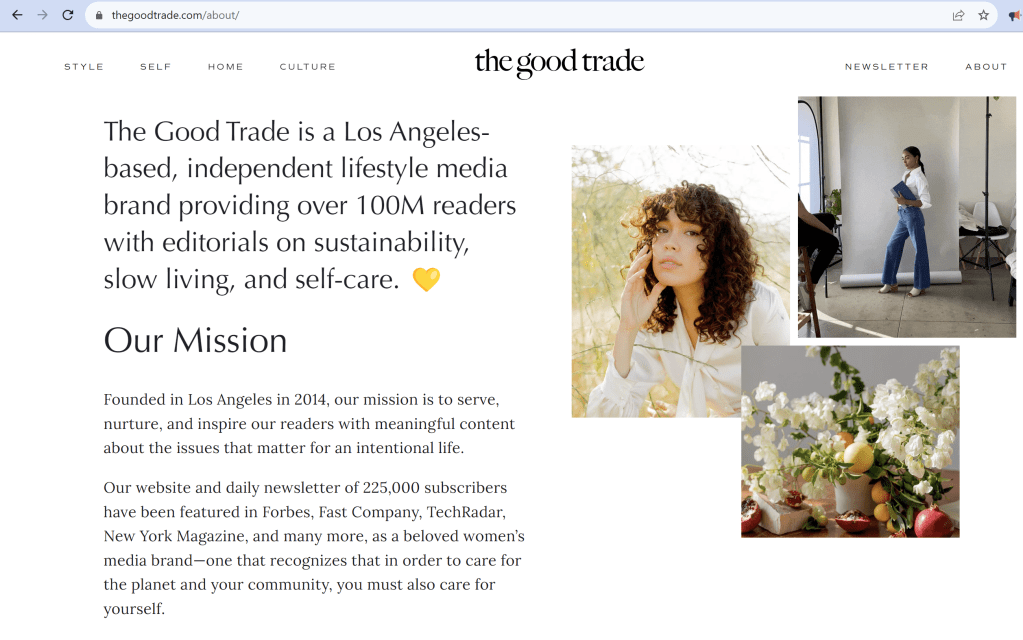
In each tab, explore the About page of the website to attain understanding of who is behind the message you are receiving. Do this for all of your sources to determine the credibility.
#6 Read and learn
This second search result makes statements and claims that are backed by Sage Journals, American Psychological Association PsychNet, and the National Library of Medicine, among other credible sources. I read all sites I’ve found credible, but prioritize those with the best sources – you’ll be more likely to find a true answer this way.
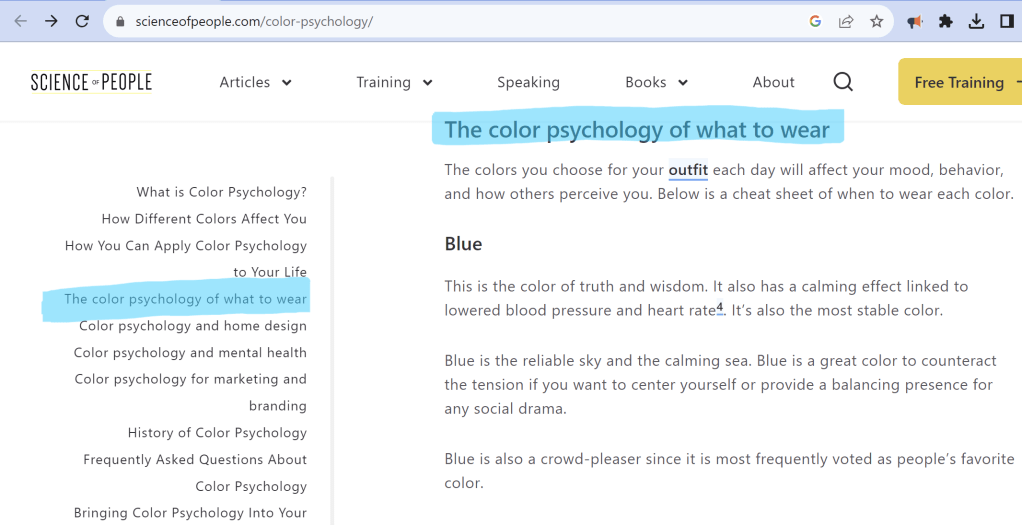
Section titled The color psychology of what to wear explains how different colors do matter. #7 Dig deeper
To attain a well rounded viewpoint, it’s crucial to visit varying sources of information. If you are really getting into it, taking notes works wonders on comparing and retaining information!
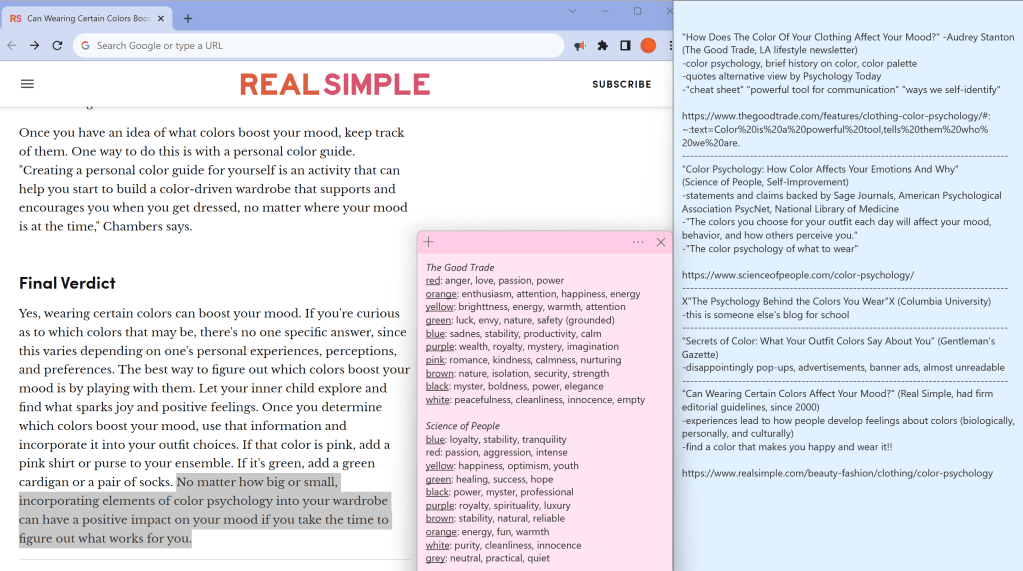
When you think you might be facing misinformation, it is important to consider a few factors:
- Is this a fact or opinion? (ex. it isn’t unusual for people to state opinions as facts)
- Can this be verified through other sources? (ex. NewsGuard, checking for bias, unbiased news)
It can be beneficial to take a mental step back and reframe what has been said. Ask yourself..
- Does this appear truthful?
- Could there be an alternative perspective?
- Do I want to risk repeating misinformation?
Although verifying information will take time, the more you do it the easier it becomes until it’s second nature. When faced with misinformation, making a digital journey to discover the truth is the answer.
-
Blog Assignment.2
Consumers pay internet service providers to build a bridge to access the internet. These companies manage the behind the scenes infrastructure while their customers pay to access the world wide web. It is generally not possible for every person to meet the complex and costly standards to connect to the internet by their own means, so most people have two options: become a consumer and use a service or resort to public WIFI.
“Access is how, when, where, and how often people have access to the tools, technology, and digital skills necessary to thrive.” –NAMLE

Image: Source An issue of access arises if internet providers are free to boost certain media over others. This does not create an even playing field on the web.
Six states, “Hawaii, Montana, New Jersey, New York, Rhode Island, and Vermont,” still follow Net Neutrality guidelines. Net Neutrality ensures equal access of all sites and services online, for everyone. This has the consumer in mind. Without this protection, for example, the very use of social media applications can be bunched in bundles – causing consumers to pay separate fees. Strikingly similar to pay to play games.
Image: Source When internet providers gatekeep access or prioritize certain sites over others, it directly impacts how consumers receive information. With Net Neutrality, individuals who seek information on the web have free reign of all details available online, which is the true meaning of access. Without this guideline in place, only specific websites are prioritized.
With certain narratives being pushed to the front page, it can be nearly impossible to find a clear cut story to trust. This is what makes Net Neutrality so important when it comes to media literacy, as access is needed to have a complete experience with media.
Telecommunications conglomerations may make consumers feel trapped, as they do not have control outside of what is available on the market.
NAMLE stresses the importance of access through showing, “Limited or no access can impact one’s ability to participate in culture, access news and information, and learn the technology skills necessary for employment, education, and civic engagement,“ .
I can personally attest to this statement, as someone who does not have any access to the news, I am always out of the loop at my job. It does effect how I participate in conversations and I also believe others view me differently because of this. I can understand how it can be viewed as irresponsible media participation, but I feel free in my choice to deny myself access to certain media.
-
Combating Misinformation: Tools & Games
Image: Source
Considering the unfortunate presence of misinformation prevalent in today’s online landscape, it is essential for individuals to gain an understanding of how to spot false narratives during each digital journey.
Moving toward more accurately identifying misinformation across the web does not need to be a solemn and dull activity. Instead, several tools and games exist to assist in this pursuit.
Out of several colorful ways to educate the public, News Literacy Project‘s RumorGuard & Harmony Square are especially special educational tools that share the same purpose in denouncing misinformation.
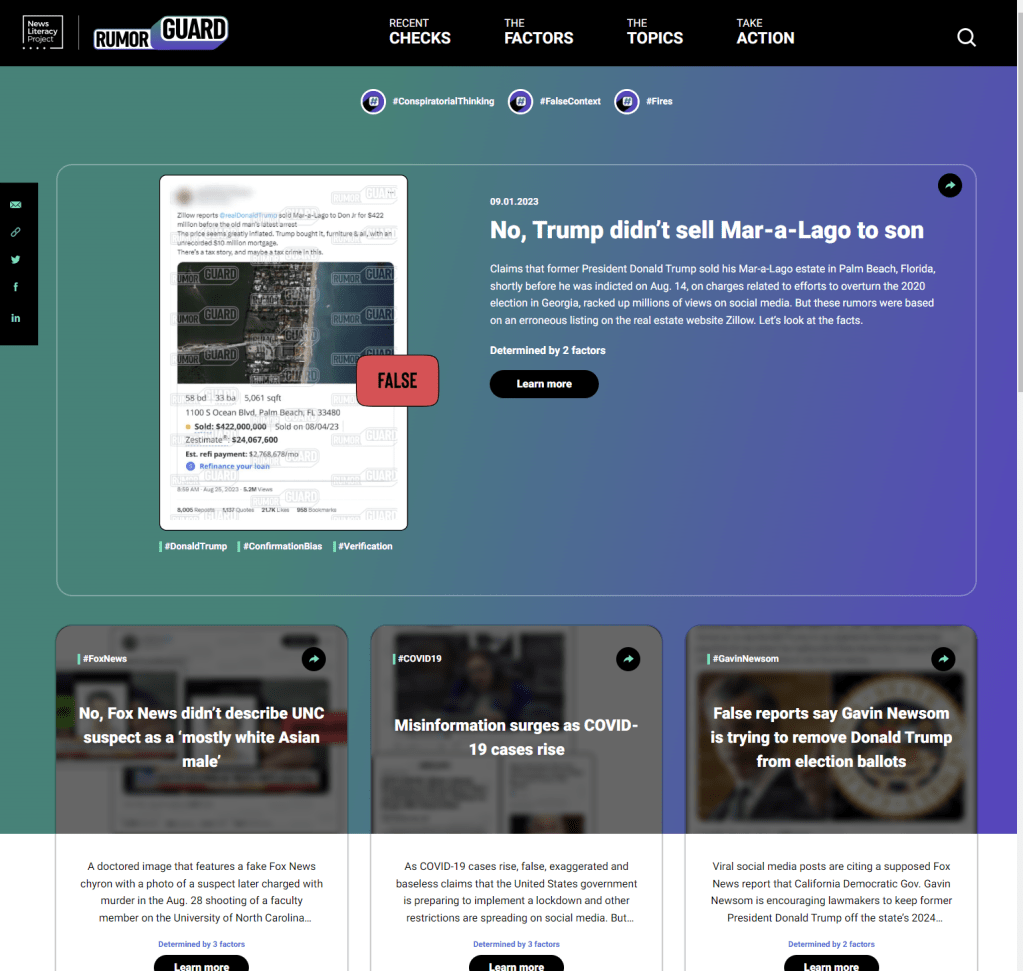
Image: Screenshot of Home Page RumorGuard is user friendly website, filled with graphics and fact-checked content that dispels misinformation circulating in current events. The site contains up to date information, dispelling rumors from the confirmation of UFOS to falsified videos of natural disasters.
The site matches rumors against its precise 5 Factor system:
- Source
- Evidence
- Context
- Reasoning
- Authenticity
By heavily watermarking their images and further marking them as false, RumorGuard does its part in preventing the spread of misinformation. If these photos were to be reposted, it would only serve as good. With current data and easily digestible graphics, it makes for an excellent resource.
Another great tool is a lovely game named Harmony Square.
*Screenshots and SPOILERS ahead*
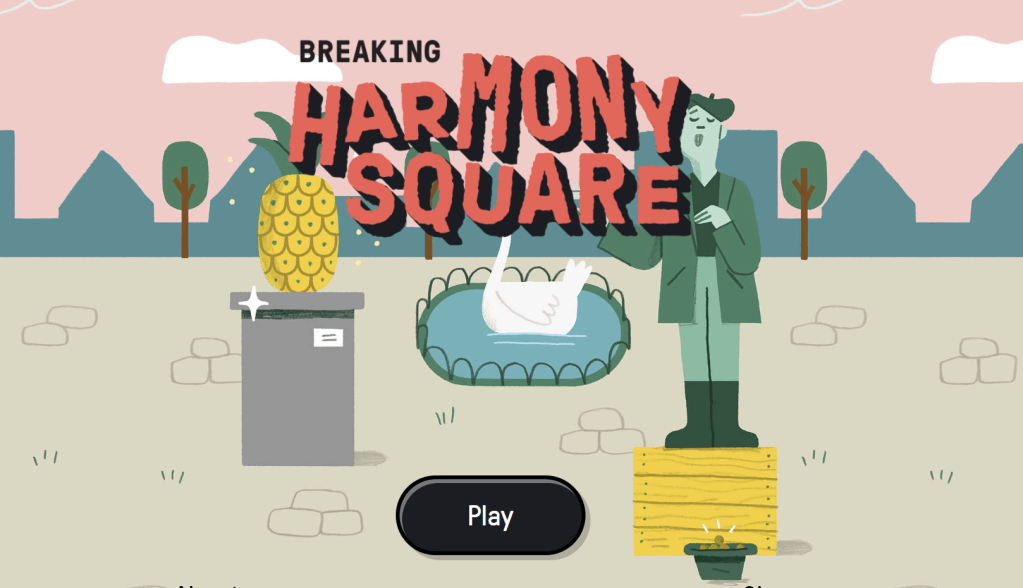
Image: Harmony Square home page
Disclaimer: *TW for animal abuse mentions in game*In short, the game is an amalgamation of a Choose Your Own Adventure meets Role Play Game (you must choose a character to play as) and it will lead you to act out some unlovely fictional scenarios. From interesting insults and ruining the reputation of others, the aim of the game is for the player to spread misinformation. It helps you understand the reasoning behind this if you don’t at first feel comfortable with the idea.
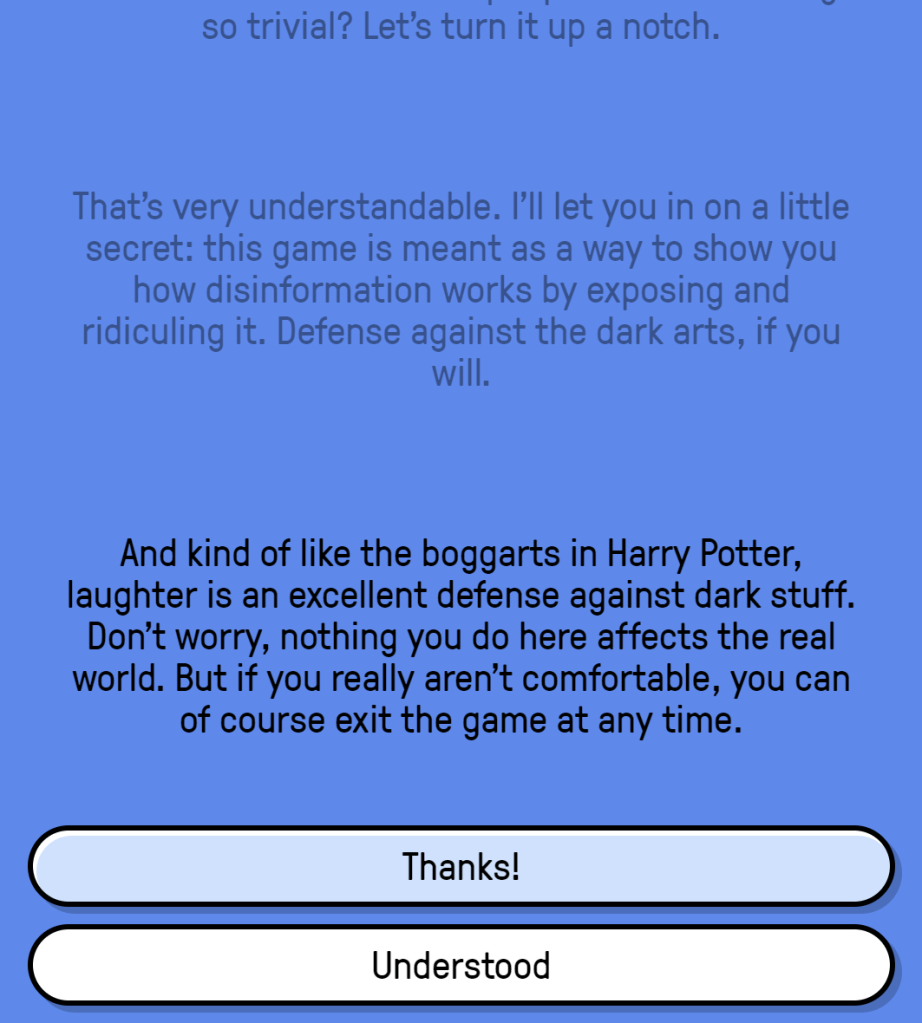
I was hesitant to spread misinformation,
so the game gently encouraged me to
do so as it was for learning purposes.The art style is charming and scientists helped create it! The About section (lower left) explains, “Scientists who worked with us on the development of this game found that playing Harmony Square improves people’s ability to spit manipulation techniques in social media posts, increases their confidence in spotting such techniques, and reduces their willingness to share manipulative content with people in their network. The results of this study were published in the journal Harvard Misinformation Review, and can be found here.”
Along the way, I was told I mastered several techniques, which were:
- Trolling: “Expressing extreme or polarizing opinions.. evoke a highly emotional response.”
- Emotion: “Large volumes of emotionally charged content.. you can certainly help decide what they think about.”
- Amplification: “Artificially boosted the reach… thinking you have more support than you really do.”
- Escalation: “You divided.. pitted them against each other.”
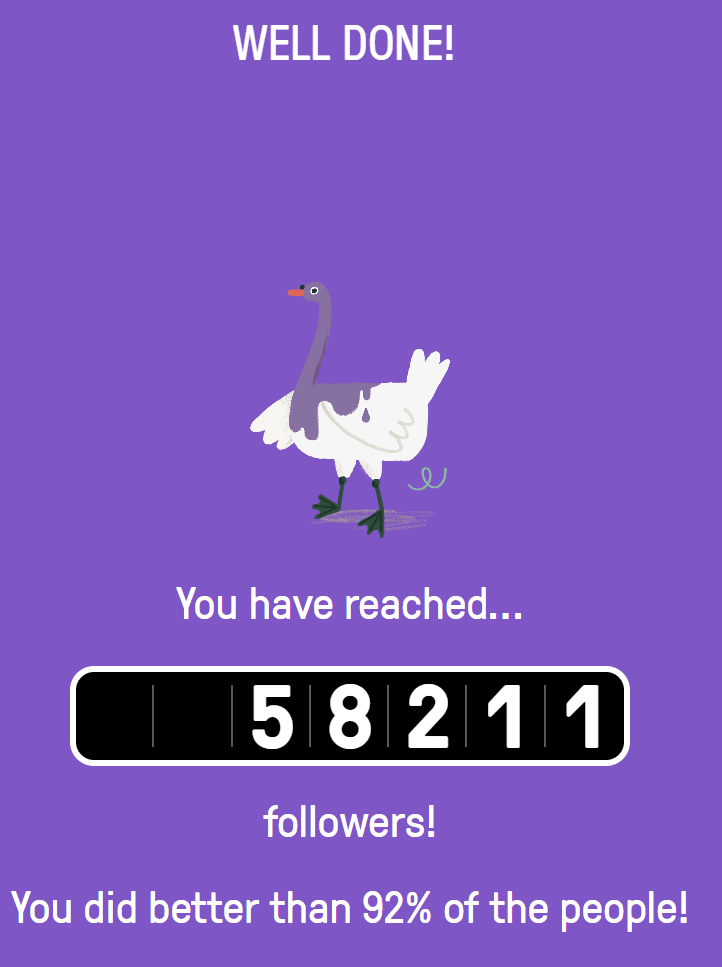
In the end, it said I scored well. What was your score? Leave a comment below!~
The aforementioned Misinformation Review supports the game in its article “Breaking Harmony Square: A game that “inoculates” against political misinformation“ where it is stated, “Over the course of 4 levels, players learn about 5 manipulation techniques commonly used in the spread of political media content: trolling, using emotional language, polarizing audiences, spreading conspiracy theories, and artificially amplifying the reach of their content through bots and fake likes.”
What is most striking is that it was shown, “People who played Harmony Square are significantly less likely to report sharing manipulative social media content with others.” Although an article from May 2020, Misinformation Review stated, “Additional support is needed for the curricular integration of games in general, and news literacy games in particular,” this game has been shown to improve discernment.
The game shocked me at how easily bot accounts raided comment sections and spread misinformation. It was surprising to learn how likes can be artificially inflated. I am certain I will double check before passing media along to others in the future.
-
Misinformation Impact
A few years back, a popular topic of conversation at my workplace was astrology. Several of my coworkers were passionate about the subject. One often mentioned that her aunt was a psychic and that gifts ran in her family. She was the most informed in the group.
I am sure astrology was brought up several times every week. Although this information was floating about our headsets frequently, literally directly into my ear, it didn’t stick with me.
While I unfortunately did not retain anything from the topic, as there were far too many things said in passing to recall, I do remember some observations upon reflection. I realized it can become a topic that produces strange results, because many people in the group did not feel just neutrally toward the subject.
Once two people found they had conflicting beliefs, one of three things would happen. I have witnessed 1. Disconnect 2. Confusion 3. Tension. If worked through, both viewpoints have the opportunity to merge into something new.
Disconnect occurs when the subject is quickly changed, for example if Sophia thought Scorpio’s were X when in the astrological world it is agreed upon they are Y. Confusion takes place when my coworkers were unable to check their phones while busy, but couldn’t recall which element was assigned to a specific zodiac. Tension is present when new information is being shared that someone else has not heard of before.
When it comes to sharing information, spreading misinformation can be an unfortunate side effect. This may occur when information is shared too soon before being properly verified. Similarly, if an individual does not have a full and well rounded view about a subject, they may not realize something they hold true is actually false. People don’t mean to spread incorrect information.
Just as I suspected.. After some searching I found this article that supports this view.
March 17 2021: Scientific American hosts an article titled Most People Don’t Actively Seek to Share Fake News by David Rand in which he states that research shows, “…over 80 percent of respondents felt that it’s very important to only share accurate content online..”.
Individuals share information because they find it important in some way. As some people will pass along media that happens to be in fact misinformation.
For example, a discussion about there being a 13th zodiac sign is brought up time and time again, like clockwork.
I happened upon the information of a new zodiac and I brought it up to my coworkers. I wasn’t yet that informed on the subject and wanted to learn more. They didn’t know about it either and it caused some of the aforementioned confusion. Ever since, I try to stay informed before speaking on something.
July 26, 2020: Dictionary.com What Is Ophiuchus And Is It Really Part Of The Zodiac? states, “Standard astrological zodiacs do not include Ophiuchus” and “Its addition to the zodiac was first suggested by astrologist Stephen Schmidt in 1970 and it was proposed again in 1995,” which goes to show this is not new information – but has been circulating since before the internet. It’s on the level of misinformation as it has been confirmed there is not a new zodiac, yet there has been confusion about the topic for years.
-
8/22/2023 : 24-Hour Media Diet
On August 22nd, 2023 I recorded my online habits for the day. The purpose of this 24-Hour Media Diet assignment for course MCO427 is to locate misinformation across natural sources of media over the course of a typical day. I set out to find these posts in the wild, through my phone. On a Monday.
10:00am – I rise and promptly hit snooze. I notice that my insurance company has emailed me while I have been sleeping.
10:15am – As I sit down to eat breakfast, I unsubscribe from receiving further insurance marketing emails. They are sorry to see me unsubscribe. I delete the most recently sent email regarding how to achieve my best personal health. I don’t doubt my insurance company but I also do not take unsolicited health advice from advertisements.
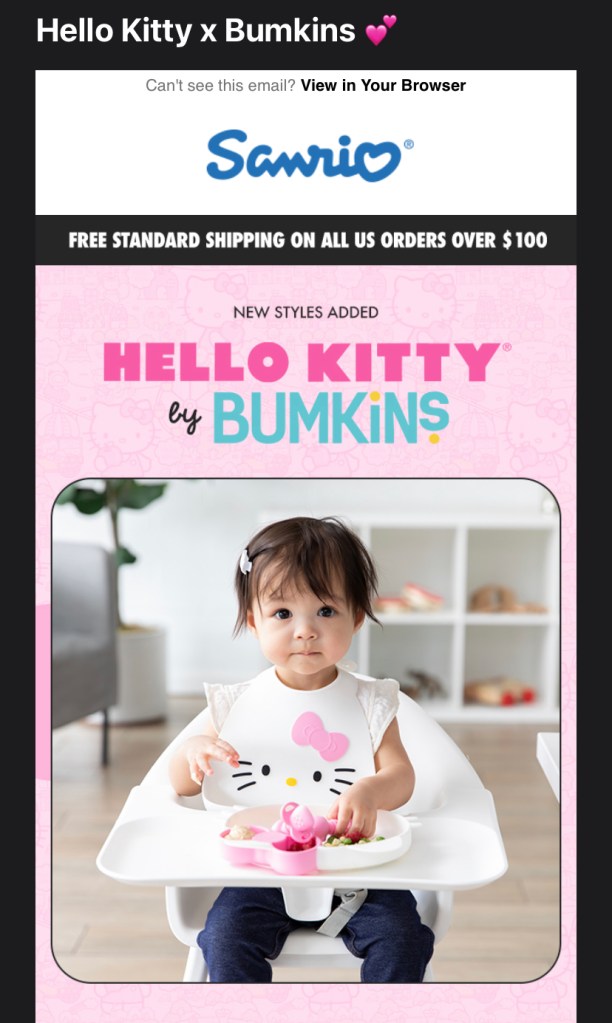
Sanrio has also emailed me about a collaboration with Bumkins, which is not relevant to my interests – but is based in Phoenix! I click the link anyway. The advertisement link leads to the kids clothing & shoes section of the site.
11am – 4pm – While at work, I am surrounded by advertisements for drinks and Spotify playlists play in the background. My phone sits patiently in my bag, waiting to be used.
5:15pm – State Farm makes an attempt at being relatable via Snapchat advertisement during dinner. The ad displays a woman swinging a cloth napkin above her head while at a dining table, with the caption “TFW you get affordable insurance.”
This statement is not valid in my personal experience. The company has both called and emailed me several times with rates that do not match up to others on the market and is outside of my budget.
As my intent was to view stories, the advertisement appearing within minutes of launching Snapchat caused me to promptly close it.

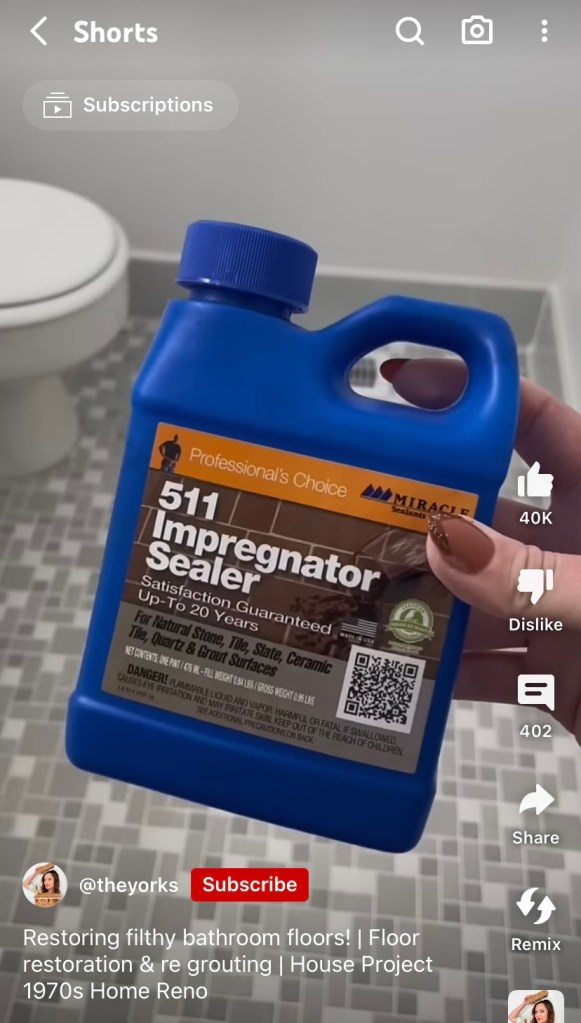
5:30pm – With an interest in home repair, I watch a YouTube short about restoring the tile of a bathroom. @TheYorks channel is dedicated to DIY home restoration and I trust their judgement. To do my due diligence, however, I located a similar impregnator sealer used in the video and verified the reviews on the Home Depot website. It appears this is an excellent product.
5:45pm – As I was finishing dinner, a YouTube short of how to take lemonade to the next level surfaced. Online, Jordan Howlett is known for producing extremely useful or fun facts about life. I found this recipe all over the internet to verify it’s good. There is no misinformation here.
7:00pm – For background noise, I listen to the channel @HigherMind9 of Bashar Channeling session, where it is said that an extraterrestrial being is being channeled through a human host. At the 15:12 mark of the video, it is said that a space craft is docked, “…above Bell Rock in your Sedona area.”
As I don’t know quite how to feel about this, I completed a little research to discover this article discussing an alternative perspective. On Sedona Red Rock News, Andrew Pardiac discusses another reason why this specific mountain feels energetically different in the area. The article states no scientific evidence supporting vortexes in the area.
8:00pm – Giving Snapchat another chance, I see an ad for Kiehl’s Truly targeted acne-clearing solution. After a quick Google search, I find the company truly has been around since 1851 according to the National Library of Medicine.
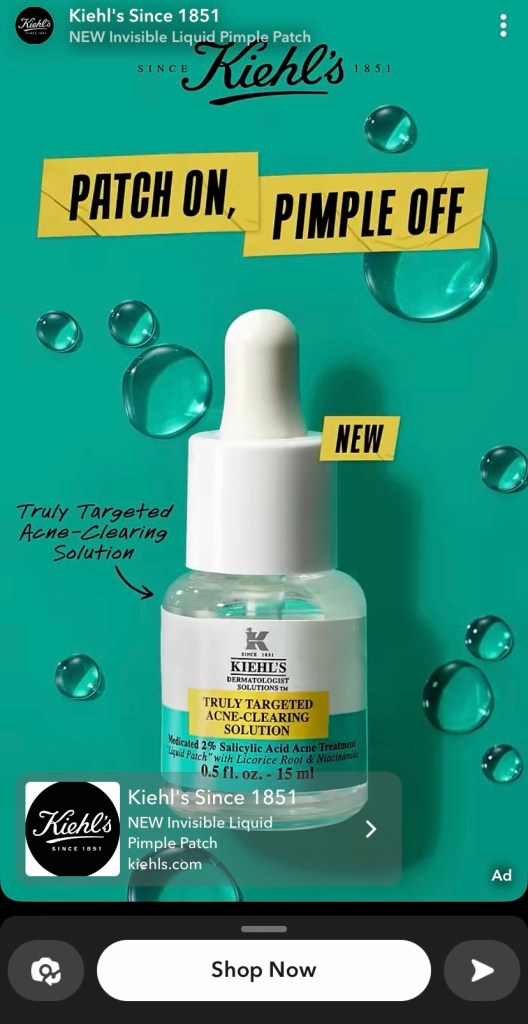
Yahoo News found this product to be one of the first of its kind. The site itself gives the product a 4.4 rating that also carries on over at Sephora, so it checks out.
9:30pm – Before logging off for the night, I browse Reddit and happen upon an energy drink promotion that sounds way too good to be true. Buy two Rockstar Energy drinks and get your money back? A very long bunny trail and even deeper rabbit hole finally led me to the terms and conditions where I validated this to be an official promotion.
I have come to realize that my bubble on the internet is very small. Prior to this assignment, I believed I had many sources of information coming to me to receive a well rounded idea of what is current online. Now, I understand that I am only viewing a very small fraction of media – so small and personalized that I barley even have a shot at seeing misinformation because of my interests.
To keep peace of mind, I typically avoid polarizing topics on the internet. I know this course will provide valuable insight on how to protect myself from misinformation when broadening my interests online.
-
Test post
Test post!~
-
!!!
Hello there, it’s nice to meet you. Welcome to this internet space. Thank you for your interest.
-
Subscribe
Subscribed
Already have a WordPress.com account? Log in now.
 Balliace

