Blog Assignment.2

Consumers pay internet service providers to build a bridge to access the internet. These companies manage the behind the scenes infrastructure while their customers pay to access the world wide web. It is generally not possible for every person to meet the complex and costly standards to connect to the internet by their own means, so most people have two options: become a consumer and use a service or resort to public WIFI.

“Access is how, when, where, and how often people have access to the tools, technology, and digital skills necessary to thrive.”NAMLE

Image: Source

An issue of access arises if internet providers are free to boost certain media over others. This does not create an even playing field on the web.

Six states, “Hawaii, Montana, New Jersey, New York, Rhode Island, and Vermont,” still follow Net Neutrality guidelines. Net Neutrality ensures equal access of all sites and services online, for everyone. This has the consumer in mind. Without this protection, for example, the very use of social media applications can be bunched in bundles – causing consumers to pay separate fees. Strikingly similar to pay to play games.

Image: Source

When internet providers gatekeep access or prioritize certain sites over others, it directly impacts how consumers receive information. With Net Neutrality, individuals who seek information on the web have free reign of all details available online, which is the true meaning of access. Without this guideline in place, only specific websites are prioritized.

With certain narratives being pushed to the front page, it can be nearly impossible to find a clear cut story to trust. This is what makes Net Neutrality so important when it comes to media literacy, as access is needed to have a complete experience with media.

Telecommunications conglomerations may make consumers feel trapped, as they do not have control outside of what is available on the market.

NAMLE stresses the importance of access through showing, “Limited or no access can impact one’s ability to participate in culture, access news and information, and learn the technology skills necessary for employment, education, and civic engagement, .

I can personally attest to this statement, as someone who does not have any access to the news, I am always out of the loop at my job. It does effect how I participate in conversations and I also believe others view me differently because of this. I can understand how it can be viewed as irresponsible media participation, but I feel free in my choice to deny myself access to certain media.
Combating Misinformation: Tools & Games

Image: Source

Considering the unfortunate presence of misinformation prevalent in today’s online landscape, it is essential for individuals to gain an understanding of how to spot false narratives during each digital journey.

Moving toward more accurately identifying misinformation across the web does not need to be a solemn and dull activity. Instead, several tools and games exist to assist in this pursuit.

Out of several colorful ways to educate the public, News Literacy Project‘s RumorGuard & Harmony Square are especially special educational tools that share the same purpose in denouncing misinformation.

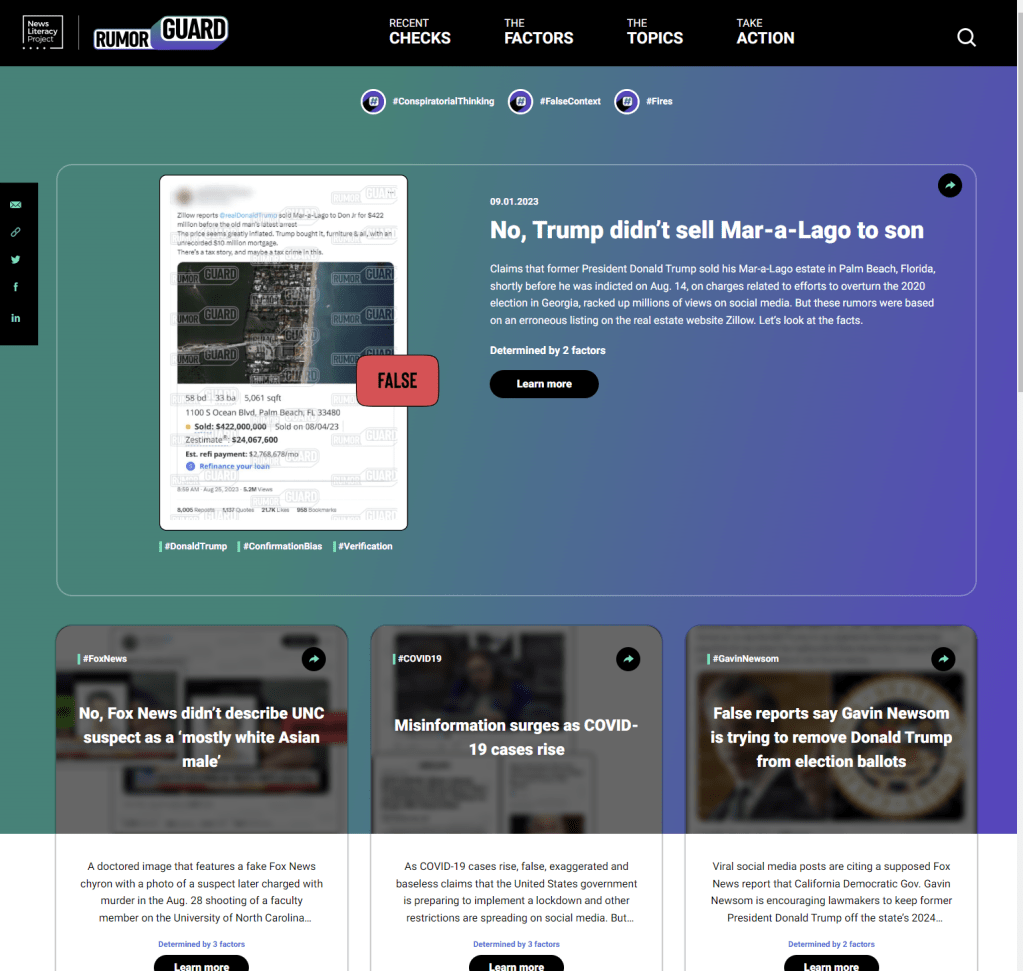
Image: Screenshot of Home Page

RumorGuard is user friendly website, filled with graphics and fact-checked content that dispels misinformation circulating in current events. The site contains up to date information, dispelling rumors from the confirmation of UFOS to falsified videos of natural disasters.

The site matches rumors against its precise 5 Factor system:

  1. Source
  2. Evidence
  3. Context
  4. Reasoning
  5. Authenticity

By heavily watermarking their images and further marking them as false, RumorGuard does its part in preventing the spread of misinformation. If these photos were to be reposted, it would only serve as good. With current data and easily digestible graphics, it makes for an excellent resource.

Another great tool is a lovely game named Harmony Square.

*Screenshots and SPOILERS ahead*

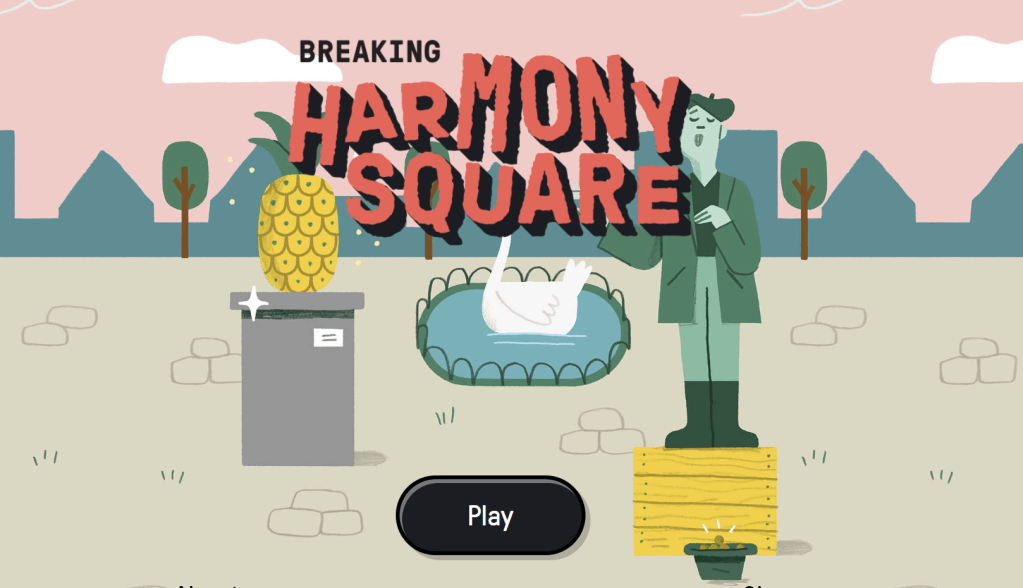
Image: Harmony Square home page
Disclaimer: *TW for animal abuse mentions in game*

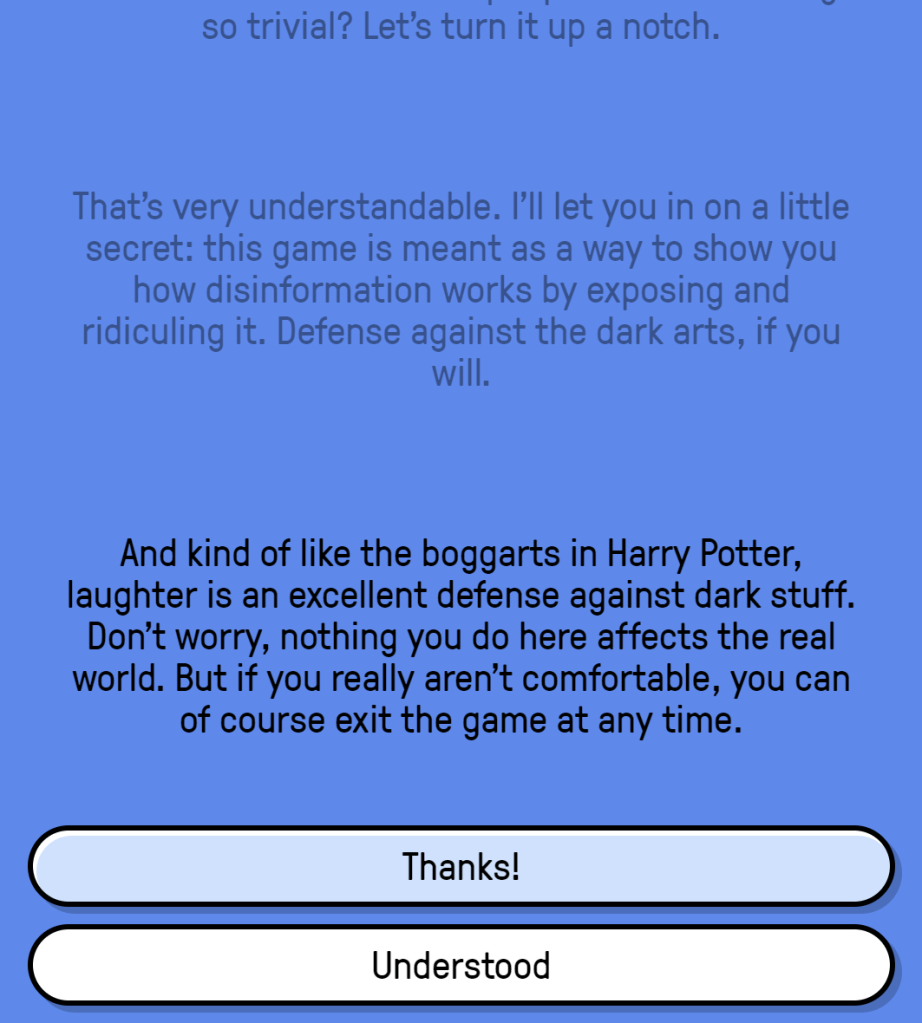
In short, the game is an amalgamation of a Choose Your Own Adventure meets Role Play Game (you must choose a character to play as) and it will lead you to act out some unlovely fictional scenarios. From interesting insults and ruining the reputation of others, the aim of the game is for the player to spread misinformation. It helps you understand the reasoning behind this if you don’t at first feel comfortable with the idea.

I was hesitant to spread misinformation,
so the game gently encouraged me to
do so as it was for learning purposes.

The art style is charming and scientists helped create it! The About section (lower left) explains, “Scientists who worked with us on the development of this game found that playing Harmony Square improves people’s ability to spit manipulation techniques in social media posts, increases their confidence in spotting such techniques, and reduces their willingness to share manipulative content with people in their network. The results of this study were published in the journal Harvard Misinformation Review, and can be found here.”

Along the way, I was told I mastered several techniques, which were:

  • Trolling: “Expressing extreme or polarizing opinions.. evoke a highly emotional response.”
  • Emotion: “Large volumes of emotionally charged content.. you can certainly help decide what they think about.”
  • Amplification: “Artificially boosted the reach… thinking you have more support than you really do.”
  • Escalation: “You divided.. pitted them against each other.”

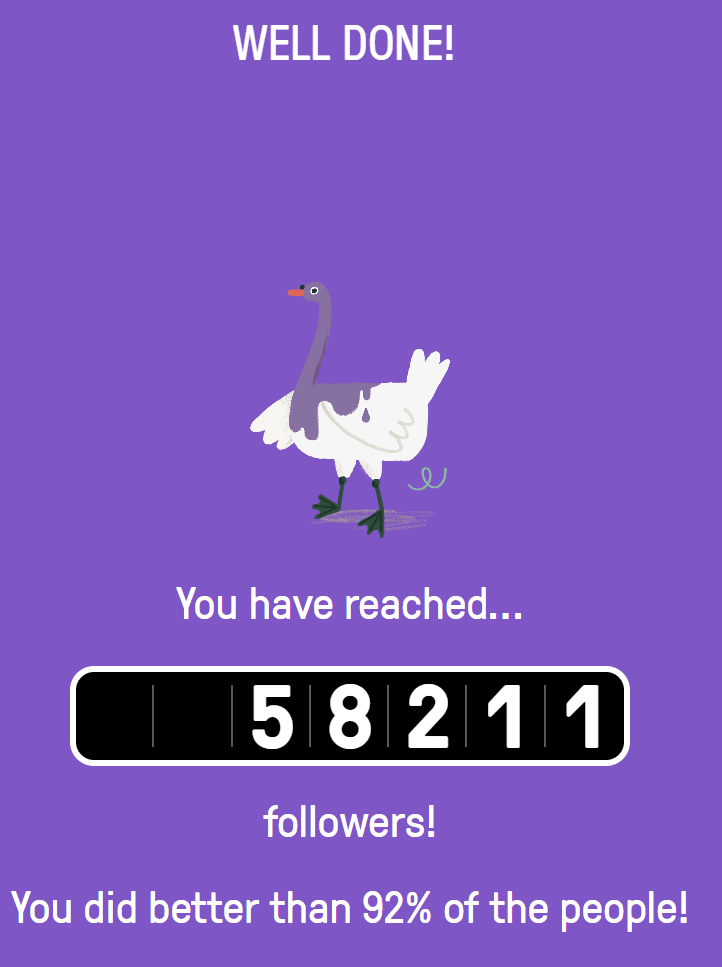
In the end, it said I scored well. What was your score? Leave a comment below!~

The aforementioned Misinformation Review supports the game in its article “Breaking Harmony Square: A game that “inoculates” against political misinformation where it is stated, “Over the course of 4 levels, players learn about 5 manipulation techniques commonly used in the spread of political media content: trolling, using emotional language, polarizing audiences, spreading conspiracy theories, and artificially amplifying the reach of their content through bots and fake likes.”

What is most striking is that it was shown, “People who played Harmony Square are significantly less likely to report sharing manipulative social media content with others.” Although an article from May 2020, Misinformation Review stated, “Additional support is needed for the curricular integration of games in general, and news literacy games in particular,” this game has been shown to improve discernment.

The game shocked me at how easily bot accounts raided comment sections and spread misinformation. It was surprising to learn how likes can be artificially inflated. I am certain I will double check before passing media along to others in the future.