
“It doesn’t matter what color you wear,”
I overheard at work earlier this year. Maybe you have had a similar thought regarding color or have heard someone subtly say something as fact that made you hesitate for a moment. This statement sounds final. But is it true?
We often hear opinions stated as fact and as a result believe them to be so. While I am sure many – including myself – desire to automatically and properly sort fact and opinion, our minds do not work this way. Richard Sima, a former neuroscientist, quotes Stephan Lewandowsky in his article, “By default, people will believe anything they see or hear.”
“Dismissing misinformation requires a whole extra cognitive step of tagging it as false in our memory. But by that time, in a sense, it’s too late, because it’s already in your memory,”
–Stephen Lewandowsky
To avoid filing away opinions as fact in our mind, it is a good idea to look into new information that gives you pause. Luckily, we can easily access nearly limitless amounts of information over the internet.
#1 Search
Select a search engine of your choice: DuckDuckGo, Google, Ecosia, Yahoo.. and enter the phrase under investigation. For instance, I will search “does it matter what color you wear” on Google as I am most familiar with it.
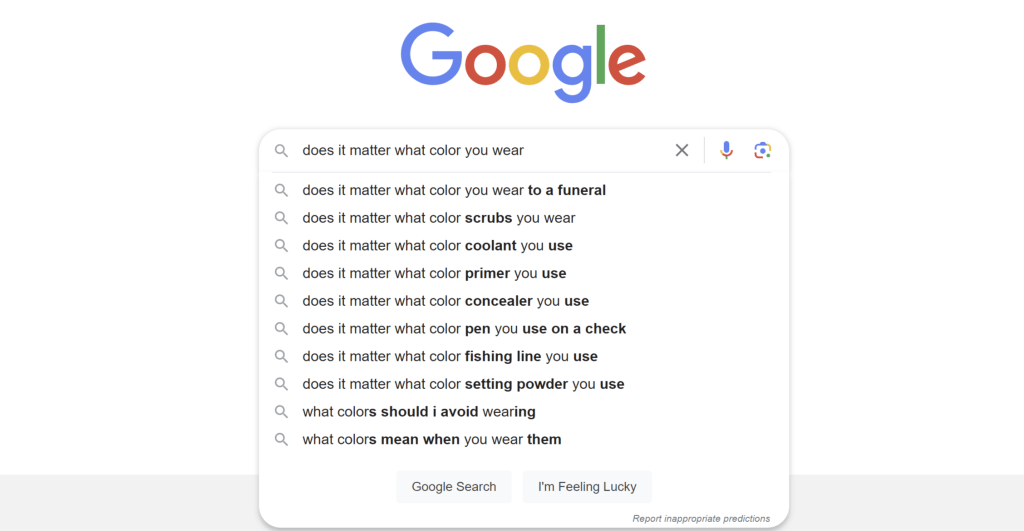
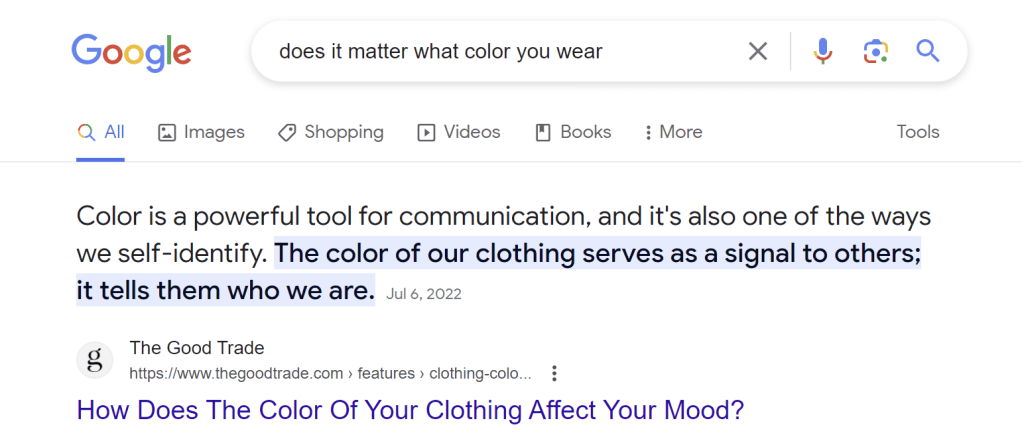
#2 First result
Consider the first search result, but don’t stop there. Can you find other sources that confirm or deny your initial findings?
#3 Browse results
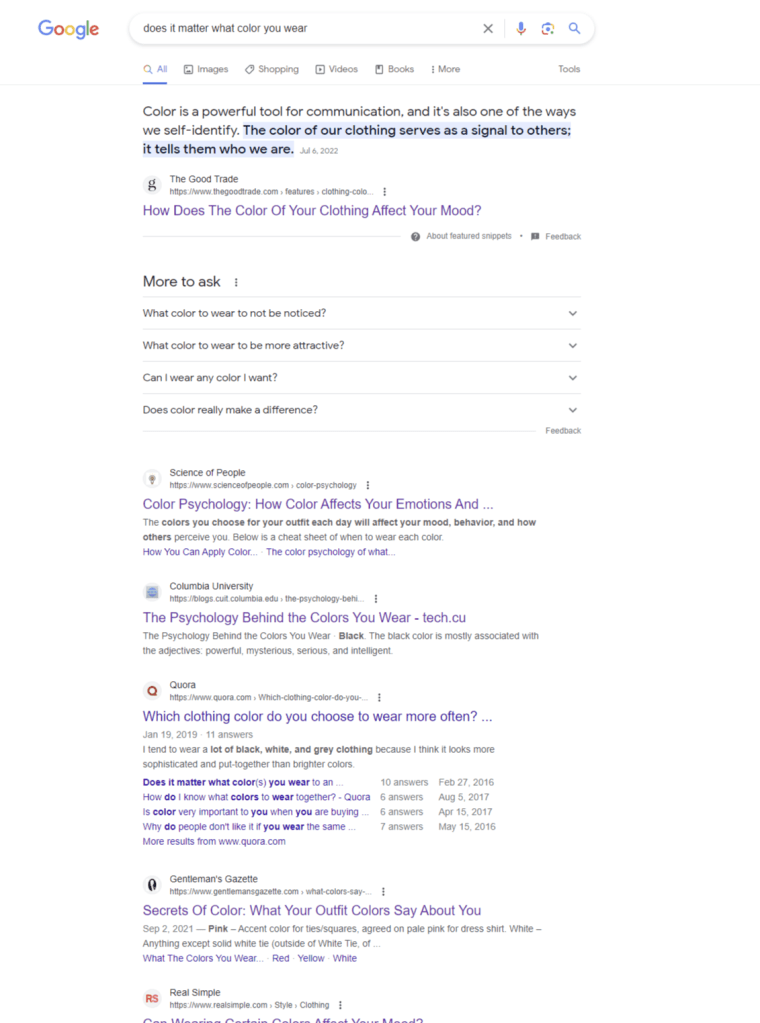
Select a variety of sources by right clicking “Open link in new tab”. I personally filter out search results like Quora as I historically have not found concise and reliable answers on that site.
#4 Lateral reading
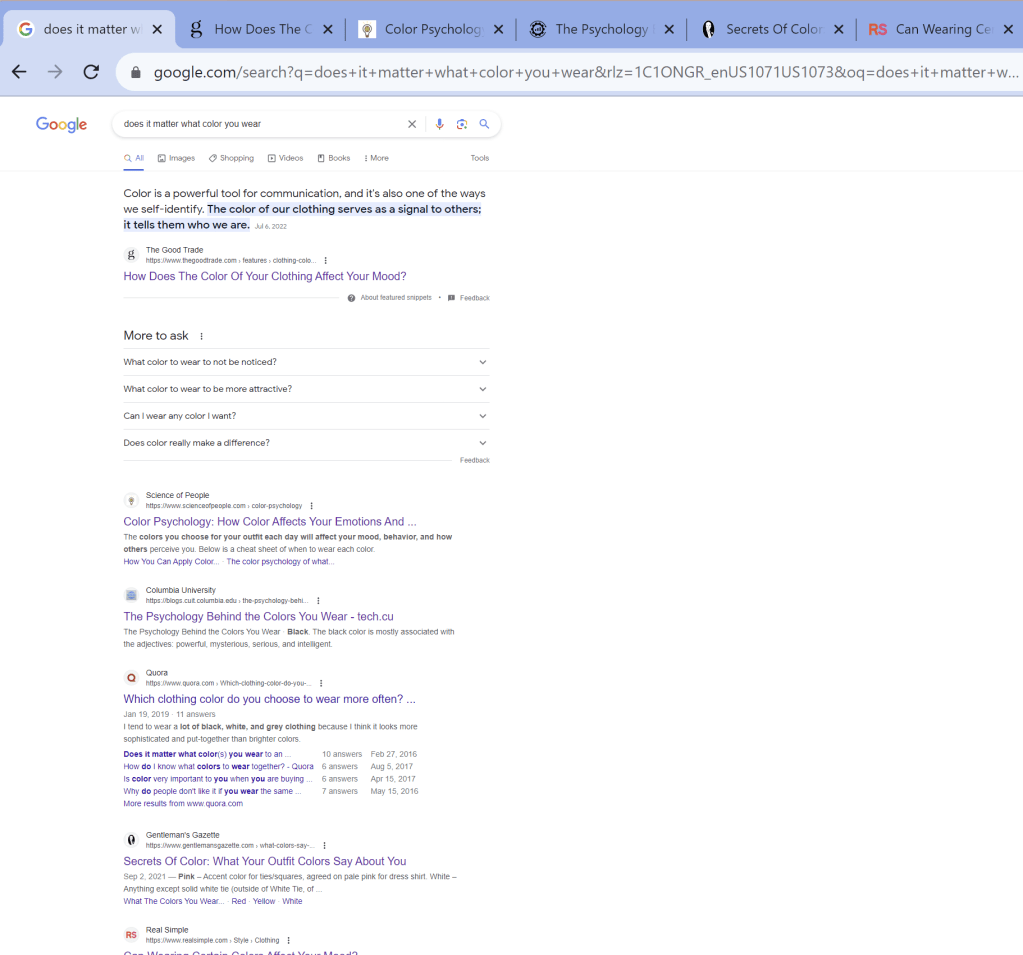
Open up links that appeal to you and appear relevant. For this example, I will be opening the first five results on the page, but you could opt for choosing sites that are familiar with trusted credibility.
if you require first person narratives try Reddit)
#5 Determine source credibility
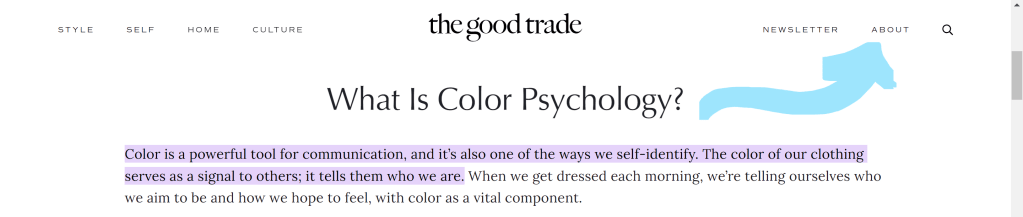
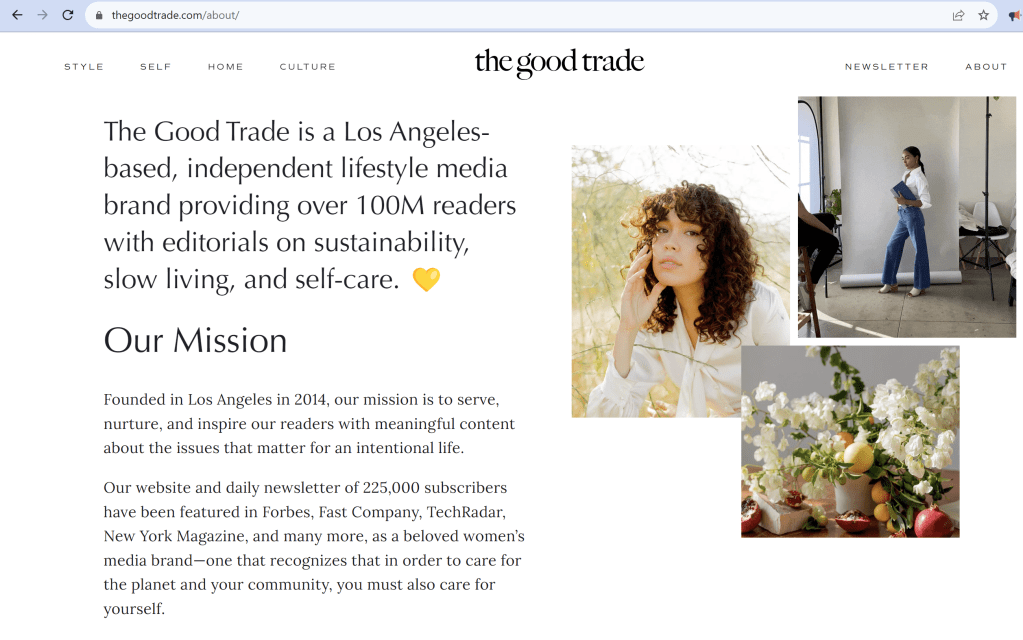
In each tab, explore the About page of the website to attain understanding of who is behind the message you are receiving. Do this for all of your sources to determine the credibility.
#6 Read and learn
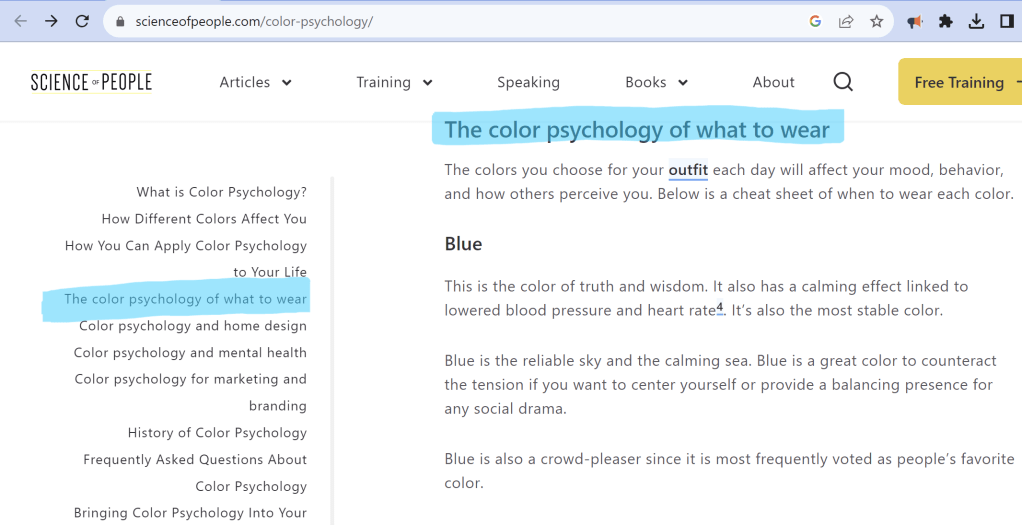
This second search result makes statements and claims that are backed by Sage Journals, American Psychological Association PsychNet, and the National Library of Medicine, among other credible sources. I read all sites I’ve found credible, but prioritize those with the best sources – you’ll be more likely to find a true answer this way.
#7 Dig deeper
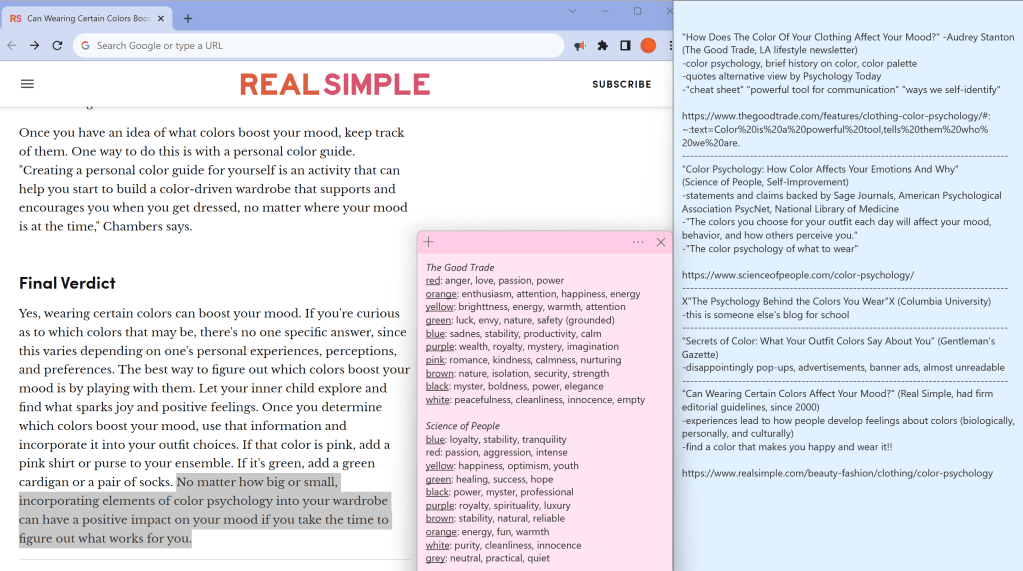
To attain a well rounded viewpoint, it’s crucial to visit varying sources of information. If you are really getting into it, taking notes works wonders on comparing and retaining information!
When you think you might be facing misinformation, it is important to consider a few factors:
- Is this a fact or opinion? (ex. it isn’t unusual for people to state opinions as facts)
- Can this be verified through other sources? (ex. NewsGuard, checking for bias, unbiased news)
It can be beneficial to take a mental step back and reframe what has been said. Ask yourself..
- Does this appear truthful?
- Could there be an alternative perspective?
- Do I want to risk repeating misinformation?
Although verifying information will take time, the more you do it the easier it becomes until it’s second nature. When faced with misinformation, making a digital journey to discover the truth is the answer.
 Balliace